How to Post a Metal Stud Framing Job for Quick Los Angeles Starts
On Construction Help Finder, posting a job costs nothing. Posting and browsing are free, and making contact is the paid product. That boundary is not negotiable. In a survey HR Brew reports, three-quarters (75%) of respondents said they are more likely to apply for a job if the salary range is listed in the posting.
Put the Pay Scale in the Post
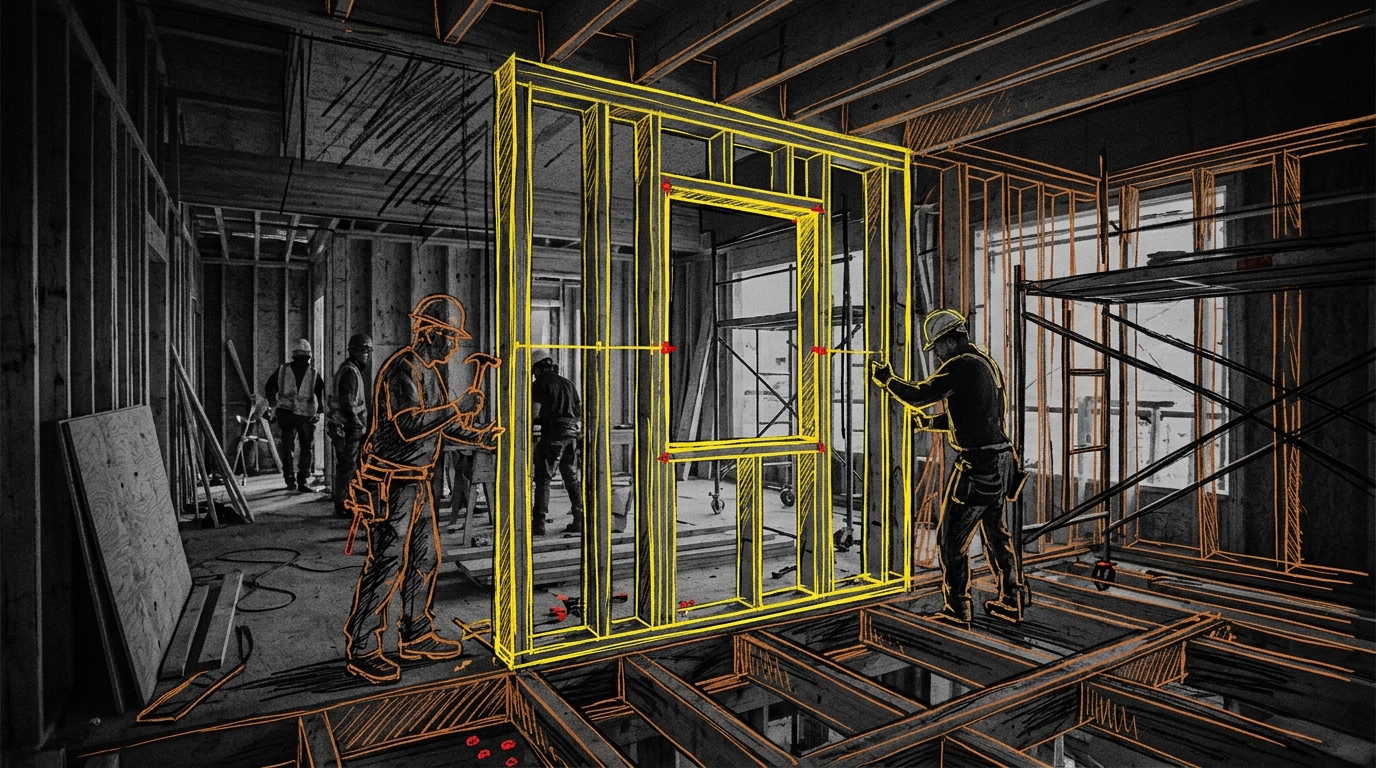
In California, if you're an employer with 15 or more employees, you have to include the pay scale for the job in any job posting. The California Labor Commissioner's Office answers the state's own questions on this at California Equal Pay Act and Pay Transparency Law FAQ.
"Pay scale" means a good faith estimate of the pay range. That is an honest best guess. It can be a salary range or an hourly wage range. It is the range the employer reasonably expects to pay for the position upon hire.
A listed range matters to the people reading your post. In a survey, three-quarters (75%) of the people who answered said they're more likely to apply for a job when the salary range is in the posting.
You'd also be in good company. Since August 2020, the share of job postings on Indeed that list wage or salary information has doubled to 50%, or half, according to new data from the job site. HR Brew reported it in One-half of US job postings now include information on salaries and wages.
Describe the Scope: Nonstructural or Structural, and Which Studs
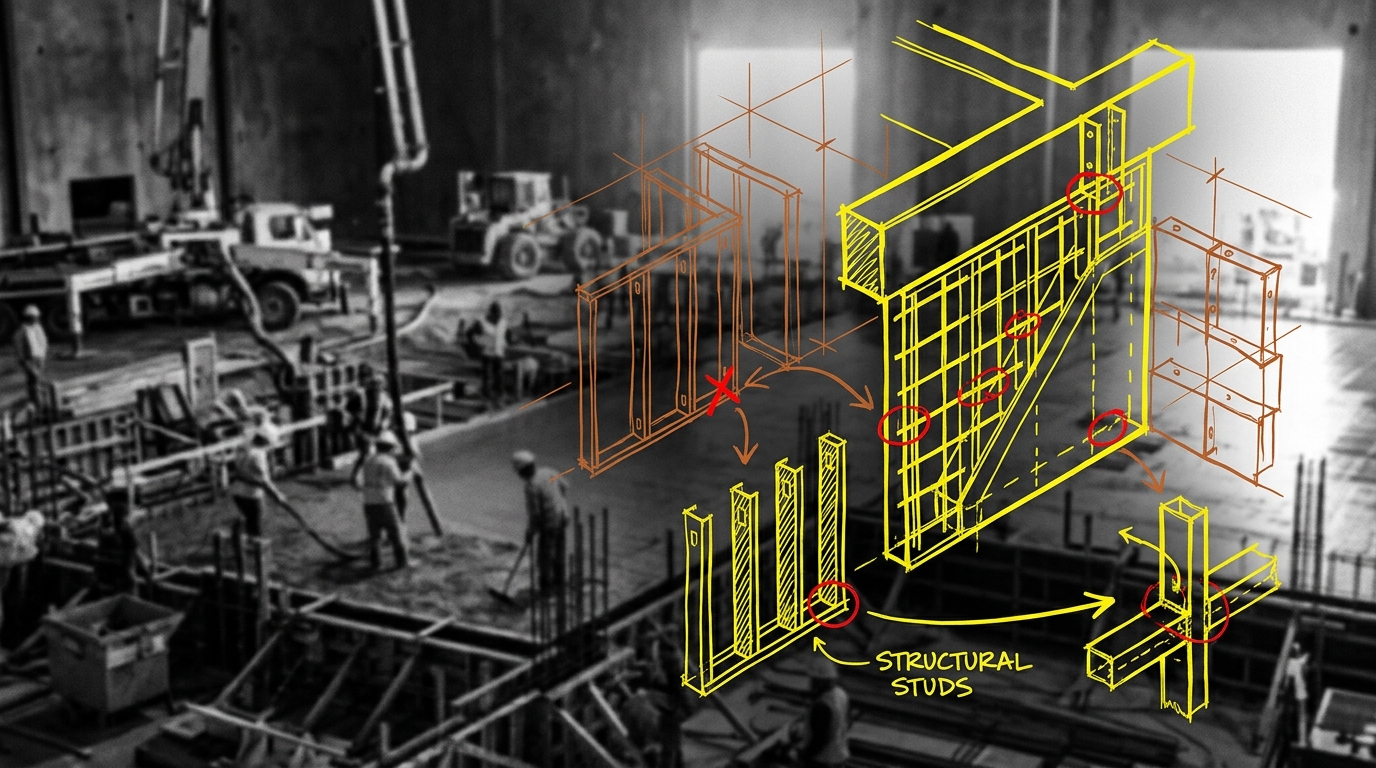
Write the scope right the first time, every time. Don't skimp on it for any reason, because skimping leaves liability for later. Paying to do it correctly once beats paying more to fix it or redo it.
Nonstructural or Structural Work
Start by naming the kind of work. BuildSteel, from the Steel Framing Industry Association, describes two scopes in Cold-Formed Steel (CFS) Framing 101: A Practical Guide.
- Nonstructural cold-formed steel framing means interior partitions, soffits and ceilings. This scope drives how fast the fit-out goes, how good the finish is, and how acoustics (sound control) get coordinated.
- Structural cold-formed steel framing means exterior and load-bearing walls, floor and roof framing, and engineered assemblies. This scope drives gravity and lateral (side-to-side) design decisions, connections, and the code-referenced structural standards.
The Formetal Company gives the stud thicknesses. By its account, nonstructural framing (interior partition walls, shaft walls, soffit framing) is typically specified at 18 mil (25 gauge), 23 mil (20-EQ) or 30 mil (20-Drywall). Structural framing (load-bearing walls, shear walls, exterior curtain walls) starts at 33 mil (20-Structural) and goes up from there.
The table below lines up The Formetal Company's thicknesses for each type of work.
| Type of work | Typical thickness | Gauge designation |
|---|---|---|
| Nonstructural: interior partition walls, shaft walls, soffit framing | Typically 18 mil, 23 mil or 30 mil | 25 gauge (18 mil), 20-EQ (23 mil), 20-Drywall (30 mil) |
| Structural: load-bearing walls, shear walls, exterior curtain walls | Starts at 33 mil and goes up from there | 20-Structural (33 mil) |
Stud Sizes in Mils, Not Just Gauge
BuildSteel says the steel framing industry now uses mils, like 18 mil and 33 mil, instead of gauge numbers to name how thick cold-formed steel is in design specifications and contract documents.
The Formetal Company explains how to read each number.
- Gauge: a higher number means thinner steel. A 25-gauge stud is thinner than a 14-gauge stud.
- Mil: a higher number means thicker steel. A 68-mil stud is thicker than an 18-mil stud.
BuildSteel also breaks a stud name like 600S162-43 into four parts.
- The first number (600) is the web depth, in 1/100-inch units.
- The letter (S) is the member profile type. S is for stud.
- The next number (162) is the flange size.
- The last number (43) is the thickness in mils. One mil is 1/1000 inch.
Wall Heights, Backing and the Installation Standard
Three more details belong in your scope.
- Wall height: how tall a wall can be at most depends on gauge, stud depth, spacing, board type and deflection limit.
- Backing: cabinets, grab bars, television mounts, handrails and similar heavy loads are normally built with heavier-gauge studs, doubled studs or added backing, as shown on the drawings.
- Installation standard: ASTM C754-20 Installation of Steel Framing Members to Receive Screw-Attached Gypsum Panel Products sets the minimum requirements for installing interior nonstructural steel framing and furring members designed to receive screw-attached gypsum panel products. It covers only members that comply with Specification C645.
C754 also says the construction details for a specific assembly to reach the required fire, sound or acoustic rating must come from reports of fire-resistance tests, engineering evaluations, or listings from recognized fire-testing, sound or acoustic laboratories. And it explains the steps for installing runners, studs, chase wall partitions, rigid furring channels, wall furring-bracket systems and soffits.
Name the installation standard and the drawings in every scope, and don't bend on them. If the work fails, you're the one exposed legally and financially, and doing it properly is the ethical way to do the job. Treat it as non-negotiable, never as a pricing option.
State the Hours and How Overtime Is Paid
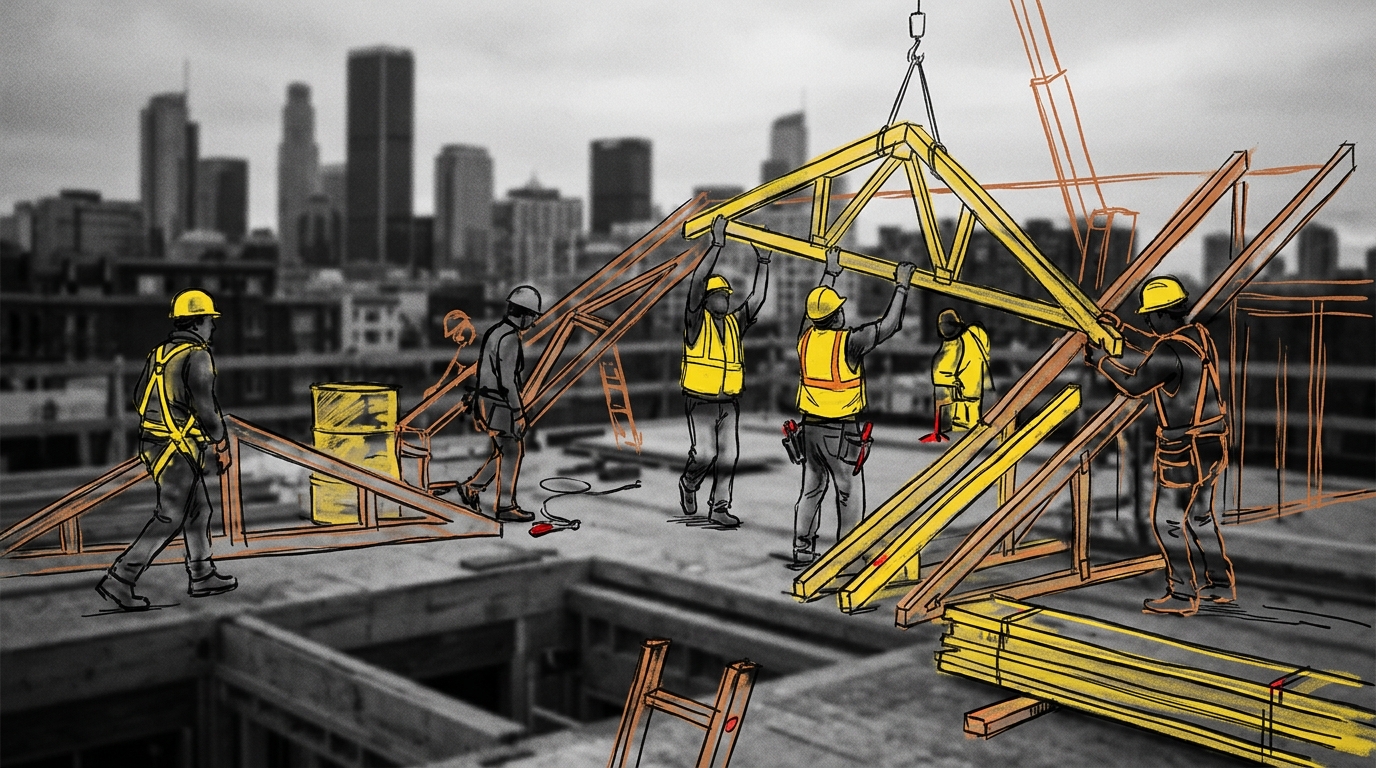
If the framers will be your employees, California's construction wage order sets the hours. The Department of Industrial Relations publishes it as IWC Order No. 16-2001 (construction on-site occupations), current notice.
Covered employees can't be employed more than eight hours in a workday or more than 40 hours in a workweek unless they get one and a half times their regular rate of pay for all hours worked over 40 in the workweek.
Pay goes to double their regular rate for all hours over 12 in a workday. Double pay also applies to all hours over eight on the seventh consecutive day of work in a workweek.
The order also sets limits on alternative workweeks.
- An alternative workweek schedule must give the affected employees work of no longer than ten hours a day within a 40-hour workweek, without an overtime rate paid for it.
- It must be a written agreement proposed by the employer who controls the affected employees' wages, hours and working conditions.
- It must be adopted in a secret ballot election, held before the performance of work, by at least a two-thirds vote of the affected employees in the work unit.
- On a public works contract, an alternative workweek requiring more than eight hours of work a day may not be used in violation of Labor Code Sections 1810-1815.
Posting on Construction Help Finder: Free to List, Paid to Connect
Posting a job on Construction Help Finder (CHF) costs you nothing. Browsing is free too. Making contact is the paid product, and that line between free and paid is not negotiable.
So the split is simple. You list for free and you browse for free. The paid part comes only when you want to make contact.
I don't trust job boards that bill per contact delivered. I've paid on big general-purpose job boards and got nothing back, and the contacts I paid for often had no construction background at all. That's why I'd post on CHF instead: listing a job is free, and the fee only pays for making contact.
You post in the web app. The founder, James Wright, built it to be simple, for people who would rather be on a job site than on a computer.
For the framers' side of this job, see Finding Commercial Metal Stud Framers Ready to Start in Los Angeles. The trade has its own Carpenters & Framers page. For how the work is done, see the Job Board for Contractors page.
California's Own Job Services: CalJOBS and America's Job Center
The state also runs job services where you can put the same post.
CalJOBS is California's online resource to help job seekers and employers use the state's workforce services. You can search for jobs, create resumes and find qualified candidates.
America's Job Center of California connects employers with job seekers at no cost.
California employers can also get no-cost help from the Employment Development Department (EDD) with hiring and training workers. That includes finding and screening job applicants, training employees, and setting up job fairs and workshops.
Report the Framer You Hire to the State Within 20 Days
Once the framer starts, the state wants a report. EDD sets out the rules on its California's New Employee Registry page.
Who Must Be Reported and When
You must report all new or rehired employees who work in California to the New Employee Registry (NER) within 20 calendar days of their start-of-work date. That date is the first day the employee performed services for pay.
Report the employee even if they stop working before the 20-day deadline. The rule covers employees of all ages, including those who work less than a full day, part time, or seasonally.
California Child Support Services adds that you must also report an independent contractor to EDD within 20 days if you pay them $600 or more, contract them for $600 or more, or file a form 1099 for their services. Employees you rehire after they were separated for at least 60 consecutive days get the same 20-day rule. Its New Hire Reporting Fact Sheet lays this out.
The table below shows which form fits which worker.
| Worker Type | Form | Deadline |
|---|---|---|
| New hire or rehire | DE 34 | Within 20 calendar days of the start-of-work date |
| Independent contractor paid or contracted $600 or more | DE 542 | Within 20 days |
How to File the Report
The employee information in the report includes the employee's first name, middle initial and last name, Social Security number, home address and start-of-work date.
According to California Child Support Services, new hires and rehires go to EDD on form DE 34. Independent contractors go on a different form, DE 542.
You can use e-Services for Business to submit a Report of New Employee(s) (DE 34). EDD says it is fast, easy and secure. You may also report a large number of employees this way.
All employers have to send employment tax returns, wage reports and payroll tax deposits to EDD electronically. The California Employer's Guide (DE 44) has more.
Frequently Asked Questions
Does a framer who comes back to work for me count as a rehire?
Only if two things are true. California law treats an employee as a rehire if the employer and employee relationship ended, and the returning employee had been separated from that same employer for at least 60 consecutive days.
Does new-hire reporting apply to an out-of-state framer working in Los Angeles?
Yes. You must report any employee who does work in California, even if the employee lives outside the state.
What happens if I report a new framer late?
You may be charged a penalty of $24 for each unreported employee if you don't report the hiring or rehiring within the time required.
Where is EDD's in-person employment tax office in Los Angeles?
It's at 888 S Figueroa Street, Suite 200, Los Angeles, CA 90017.
Ready to Post Your Framing Job?
Put the pay scale in the post. Write the scope in mils, with wall heights, backing and the installation standard. Get the hours and overtime right. List the job on Construction Help Finder or the state's job services, then report the hire to the state.
Construction Help Finder is a job board that helps Southern California employers fill construction crews with skilled trade workers. Posting and browsing cost nothing, and making contact is the paid product. Why not Get Started and post your job free today?