
Growing a Crew Fast After Winning a Larger Commercial Job
The fastest way to grow a crew after winning a larger commercial job is to widen your recruiting reach immediately, post openings across every relevant trade, and move candidates through screening in batches rather than one at a time. Contractors who land bigger jobs often need several trades staffed at once, so waiting on a single slow channel costs time you don't have. Industry data shows this shift toward broader, faster recruiting is already underway: in AGC's 2023 survey, 63 percent of construction firms had added online recruiting methods such as social media or targeted digital ads, up sharply from 39 percent the year before. More recently, the 2026 AGC/NCCER survey found 49 percent of firms added or increased online recruiting such as social media and targeted digital ads specifically to reach younger applicants entering the trades. Posting openings early — as soon as a bid is won, not after mobilization begins — gives a longer runway for candidates to see the listing, apply, and be reviewed. Widening the search across trades means not waiting until one crew is fully staffed before starting on the next; running searches in parallel for carpenters, electricians, laborers, and other needed trades shortens the overall time to full staffing. Screening in batches — reviewing a group of applicants together on a set schedule rather than reacting to each application individually — lets a contractor compare candidates and make faster decisions without constant start-stop interruptions to the work of running the job.
Post Openings Early and Offer Competitive Pay
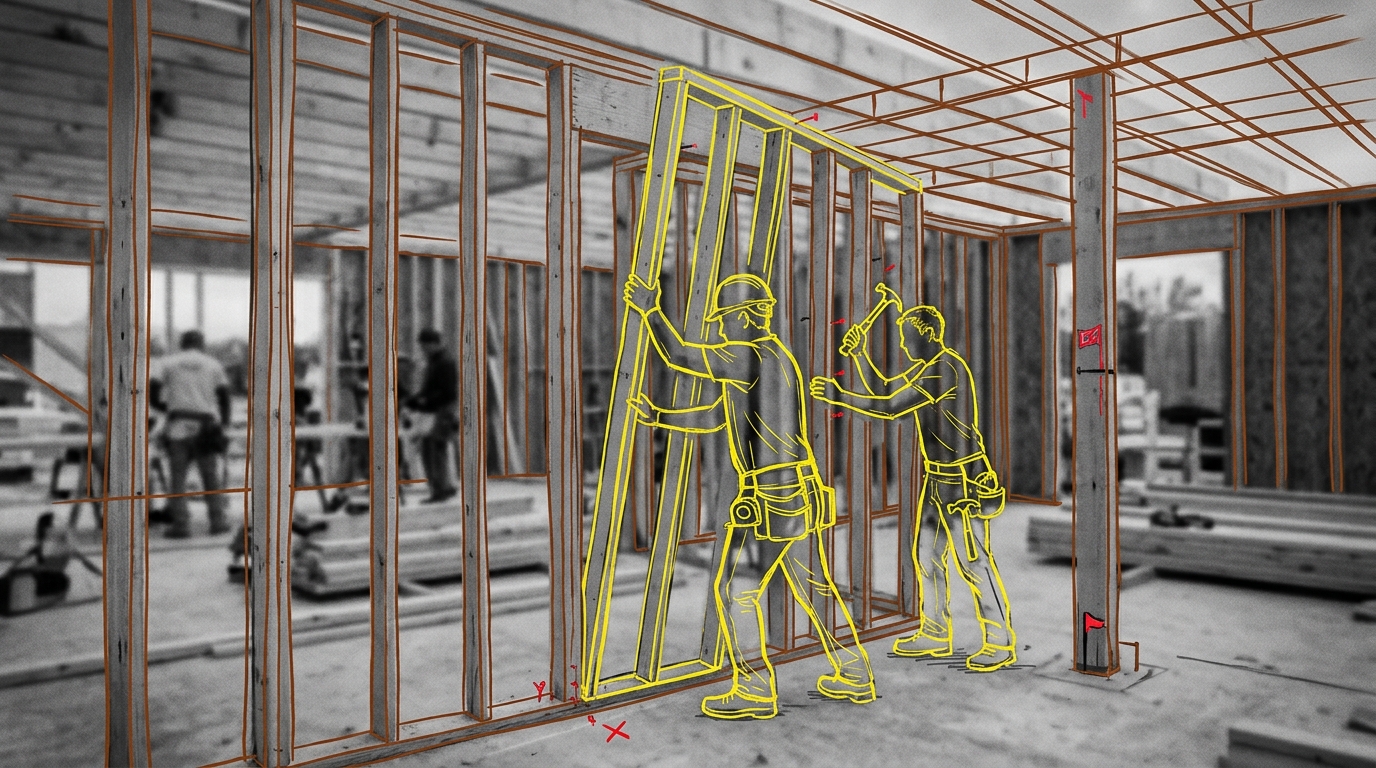
Once a bid is won, the clock starts on two things at once: mobilizing the work and finding the people to do it. Posting job openings the moment the award is confirmed, rather than waiting until a start date approaches, gives qualified trade workers more time to see the listing and respond, and it gives the contractor a real pool of candidates to choose from instead of whoever happens to be available at the last minute.
Timing isn't the only lever. Pay matters just as much, especially in a labor market where skilled trade workers have options. Contractors who want to pull ahead of competing postings have been adjusting their offers to match the market: in AGC's 2023 survey, 81 percent of construction firms said they had raised base pay rates for their workers during the past year. A contractor who posts early can back the listing with a competitive rate.
For contractors who want to get ahead of the recruiting timeline even further, there's a case for starting the search before the bid is even finalized — see the guide on lining up trade workers before a bid for that earlier-stage approach.
Report Each New Hire to the State Within 20 Days

Posting the opening is the visible part of growing a crew, but it's only step one. Once a worker is actually hired, a state paperwork requirement follows close behind, and it comes with a firm deadline.
California employers must report every new or rehired employee working in California to the EDD New Employee Registry within 20 calendar days of the first day worked for wages. This applies every time a crew brings on someone new, whether it's one carpenter or a half-dozen laborers added in the same week to meet the demands of a larger job. For a contractor scaling up quickly across multiple trades, it's not a one-time task — it's a recurring item to track alongside the hiring itself, since each new hire resets the 20-day clock on its own. Building this into the standard hiring workflow, rather than treating it as an afterthought once the crew is already on site, keeps a fast-growing operation from piling up overdue filings.
Bring New Workers Up to Speed Safely and Fast

Adding workers quickly doesn't mean skipping the steps that keep them safe once they're on site. California's construction safety rules build in specific requirements for how newly employed workers are brought up to speed, and these apply no matter how fast the crew is growing.
Cal/OSHA's construction rules under Title 8 of the California Code of Regulations, section 1510, require that newly employed workers be told the hazards and safety precautions for their work and directed to read the employer's Code of Safe Practices (Effective Training). This is a baseline expectation, not an optional extra for slower hiring periods.
Beyond that baseline, Cal/OSHA's suggested safety program for contractors calls for the foreman to give individual safety instructions, as needed, to new workers and to anyone found working unsafely. In practice, this puts weight on the foreman during a rapid scale-up. For a contractor onboarding several new hires in the same week, that means building foreman time for those instructions into the onboarding schedule rather than assuming it happens informally.
Public Works Jobs Add Apprentice Rules

For contractors working on California public works projects, growing a crew fast isn't just about finding willing workers — it comes with specific apprenticeship obligations that affect the ratio and timing of who can be brought on.
In California, every public works contract worth $30,000 or more carries a duty to hire apprentices, unless the prevailing wage determination shows the craft does not require them.
Timing matters here too. On California public works projects, contractors must request apprentices for each craft from the apprenticeship committee using the DAS 142 form at least three business days before they are needed (Public Works Apprenticeship Requirements). That lead time needs to be built into the hiring plan from the start — a contractor who waits until the crew is short-handed to make the request is already behind schedule.
There's also a ratio requirement to track: on California public works projects, contractors must employ one hour of apprentice work for every five hours worked by a journeyman-level worker. For a contractor rapidly adding journeyman-level trade workers to meet a bigger job's demands, this ratio needs to be tracked alongside the overall headcount from day one.
Classroom time belongs in the apprentice plan too: ABC Southern California apprentices working for member employers get at least 150 hours of classroom training a year.
Keep a Fast-Grown Crew From Leaving

Growing a crew quickly is only half the job; keeping new workers is the other half.
AGC reports that many contractors are responding to early turnover with structured onboarding, regular check-ins, safety-focused onboarding, formal jobsite orientations and mentor or buddy systems. None of these require slowing down the hiring process itself — they're about what happens to a worker in the first days and weeks after joining the crew, which is exactly the period where a fast-grown team is most likely to lose people it just worked hard to find.
This shift shows up in where contractors are putting their money, too. In the 2026 AGC/NCCER survey, 35 percent of firms started or increased training spending in the past 12 months, and 25 percent started or expanded in-person onsite craft training. For a contractor who has just brought on a wave of new hires to staff a larger job, this kind of investment is directly relevant — a newly grown crew may benefit from onsite training.
Southern California has carpentry training close by: the Western States Carpenters Training Fund runs a training center in Ontario.
Not every fast scale-up goes according to plan, and sometimes a contractor who wins a bid finds the crew they expected to have falls through anyway — for that situation, see the guide on handling a lost trade crew after winning a bid. And for contractors trying to fine-tune exactly when a posting should go live relative to the project's actual start, there's more detail in the piece on adjusting posting timing to a project start date.
Frequently Asked Questions
What is the OSHA 10-hour course for, and should new crew members take it?
OSHA's 10-hour Outreach course is primarily intended for entry-level workers, so it fits crew members who are new to the trade. Experienced hires may already hold it, so ask before scheduling anyone.
How much turnover should a contractor expect from newly hired field workers?
AGC's 2026 survey found that 83 percent of firms had at least some turnover among new field employees within their first 90 days. Planning for some early turnover when growing a crew quickly is realistic rather than unusual.
How much notice is needed to request apprentices on a California public works job?
The DAS 142 form requires that requests for apprentice dispatch on public works be submitted in writing at least 72 hours ahead of when they're needed, not counting weekends and holidays. Building this lead time into a hiring timeline avoids last-minute scrambling.
What paperwork deadline applies after a California employer hires someone new?
California employers must report newly hired employees to the New Employee Registry within 20 calendar days of the employee's start-of-work date. This applies to every new hire added while scaling up a crew.
Does Construction Help Finder place or supply workers for a project?
No. Construction Help Finder does not perform staffing, placement, or labor contracting work. It is a job board where employers post openings and trade workers apply directly.
Growing a Crew the Right Way, Fast
Winning a larger commercial job is the easy part compared to staffing it well. The contractors who scale up successfully tend to do the same few things: they post openings the moment the bid is won rather than waiting, they back those postings with competitive pay, they keep state paperwork and apprenticeship requirements on a tracked schedule, and they treat onboarding and safety instruction as part of the hiring process. None of this requires slowing down. It requires building structure into a process that otherwise feels like it's moving too fast to manage.
Construction Help Finder is built around that first step: a construction job board where employers post trade openings and skilled trade workers find and apply to them directly. Posting early, posting across every trade a bigger job requires, and reviewing applicants in batches gives a contractor more time to find workers before the work starts. To post your opening and reach skilled trade workers directly, Get Started.