Phone Interview vs. Site Visit: Screening a Framing Candidate
NCCER says assessments are proctored, closed-book tests that measure whether people understand key concepts and best practices in a craft area. It says performance verifications are hands-on tasks, watched by a certified evaluator, that show a person's physical ability to do key job duties correctly. Interviewer Signal says a paid trial day works best as the last step after a structured interview, not as a replacement for it.
What a Phone Interview Can Check
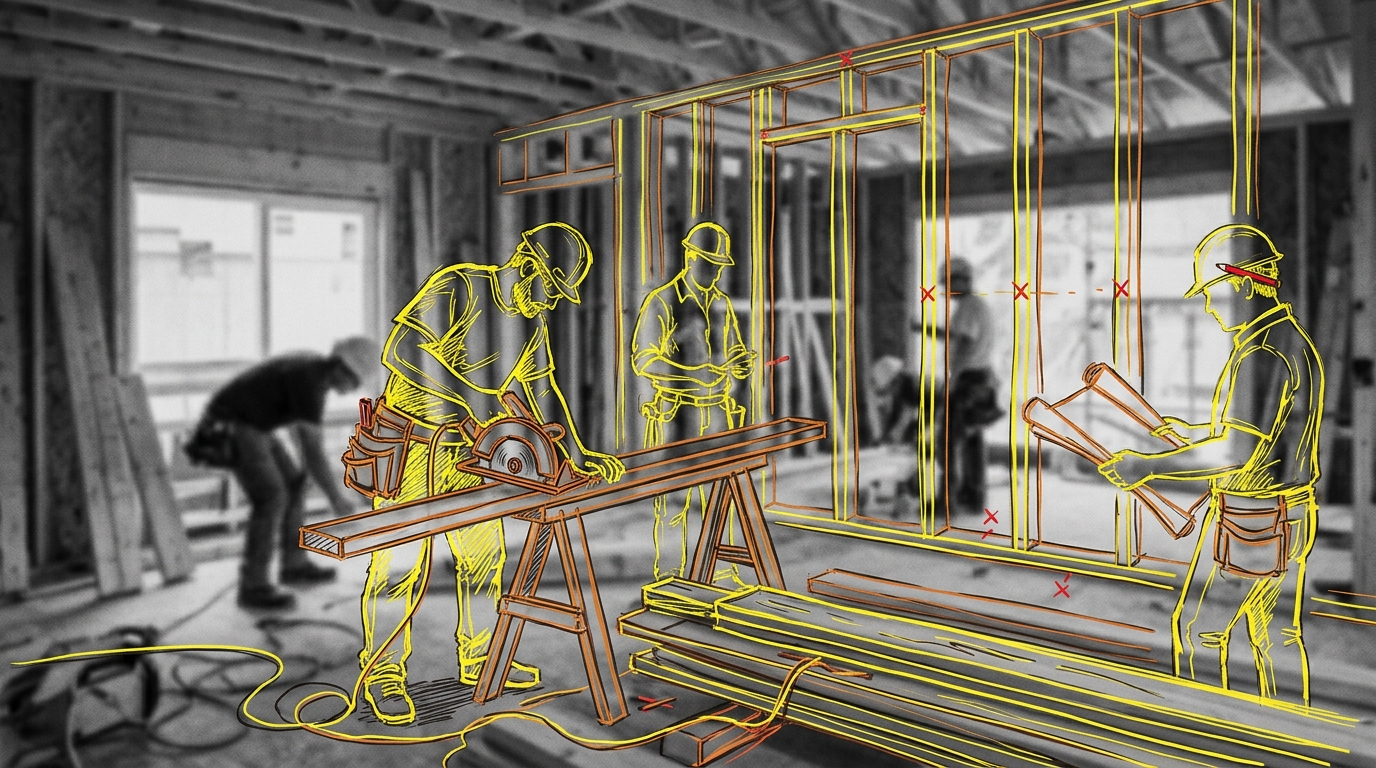
A phone screen can cover a lot of ground for a framing candidate. The Associated Builders and Contractors (ABC) carpentry competition lists what it calls essential knowledge: blueprint reading, layout, framing, rafter layout and cutting, stair layout and building, concrete forms, interior trim, material takeoff and use of a builder's level.
You can turn that list into questions for your call. You can also use it later as a checklist on a site walk. Read the full list in the 2024 Carpentry Competition Fact Sheet.
ABC also strongly recommends that carpentry competitors have working knowledge equal to a third-year apprentice. That's a handy experience benchmark.
The Industry Business Roundtable describes journey craft persons as experienced workers, typically with four or more years of field experience. They're expected to have finished approved training in their craft and/or to have had their knowledge and performance tested and confirmed. You can read more in Key Tenets for Contractor Workforce Development.
When you screen by phone, put real hands-on experience first. Measure each answer against those experience benchmarks. Finding someone with real experience is the whole point of looking for help.
Don't take big claims at face value. A candidate may say they can handle expert-level work, so ask for specifics about projects they've actually finished. Who was the job for? What did they frame? What did they lay out? For more ideas, see Questions to Ask a Finish Carpenter During a Phone Interview.
NCCER (the National Center for Construction Education and Research) says that when assessments and performance verifications are combined with a person's work experience and employment history, they give a clear picture of that person's knowledge and skills. The phone call is where you start to learn about that work history.
What a Hands-On Check Adds

Trade assessments pair a knowledge test with hands-on tasks that someone watches. NCCER says employers can use its craft assessment program to check the skills of a person they might hire, a current craft worker, or their whole workforce. You can read about it on NCCER's National Craft Assessment and Certification Program page.
The program checks the journey-level knowledge and skills of craft professionals, meaning workers who are fully trained in a craft. It's based on industry-recognized standards for each craft, and it works through knowledge assessments and performance evaluations. See Assess. Verify. Upskill. for more.
The two parts work like this:
- Assessments are proctored, closed-book tests, which means someone watches you take them. They measure whether you understand key concepts and best practices in a craft area. Most knowledge assessments take 60 to 90 minutes.
- Performance verifications are a series of hands-on tasks while a certified evaluator watches. They show a person's physical ability to do key job duties correctly.
NCCER's list of testing offerings includes performance verifications for Industrial Carpenter and Commercial Carpenter. You can check the Testing Releases & Updates page and the NCCER Assessments page.
ABC's carpentry competition uses hands-on work too. Its practical test has carpenters perform hands-on tasks specific to the trade, building wall and roof systems with both metal and wood parts. The online exam makes up 25% of a competitor's overall score. So a hands-on work sample is a recognized way to judge carpentry skill.
The table below lines up these skill checks used in the carpentry trade.
| Screening Step | What It Checks | Source |
|---|---|---|
| NCCER knowledge assessment (most take 60–90 min) | Key concepts and best practices in a craft area; proctored and closed-book | NCCER |
| NCCER performance verification | Hands-on tasks watched by a certified evaluator | NCCER |
| Carpenter performance verifications | Offered for Industrial Carpenter and Commercial Carpenter | NCCER |
| Competition practical test | Building wall and roof systems with metal and wood components | ABC |
| Competition scoring split | Online exam is 25% of the overall score | ABC |
Don't skip the hands-on check. Skipping it is skimping, and it can leave you open to liability down the road. Do the check right the first time, so you aren't stuck redoing or fixing the work later.
Short Practical Tasks for a Site Visit
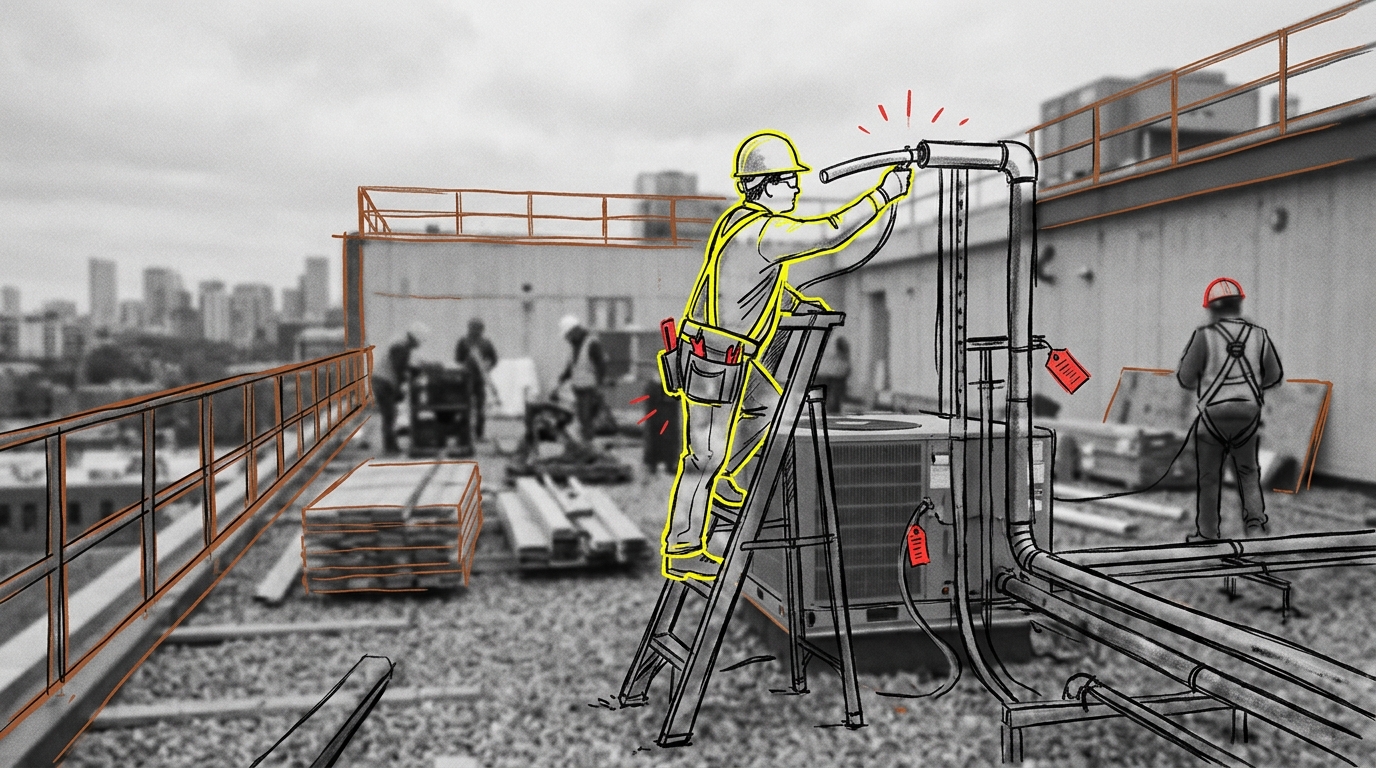
NOCTI gives you a good yardstick for timed tasks on a site visit. Its carpentry performance assessment takes 2 hours and 45 minutes and has 7 jobs. That shows you how long a hands-on skills check can run. You can read the whole thing in the Carpentry Job Ready Credential Blueprint.
Here are two tasks from that blueprint you can borrow:
- Square layout, 20 minutes. The participant chalks out a 12-foot by 12-foot square using blue chalk and puts blocks at the corners. It shows that a short task can test layout skill.
- Common rafter layout. The participant lays out one common rafter from provided plans and materials. They have to show all the corrections and adjustments it needs.
Before a Candidate Walks Your Jobsite

Before a candidate visits, they need a site-specific orientation. ABC SoCal says subcontractors and visitors need one before they enter a jobsite, and that covers a candidate's site visit. It also says new hires need a comprehensive orientation covering emergency procedures, site-specific hazards, personal protective equipment (PPE) expectations and reporting protocols. Read more in Workplace Safety Regulations in Construction.
I won't bend on quality or cut corners, and that starts with the orientation. Skip it and something goes wrong, and you're facing legal and money trouble. I also hold that it's simply the right way to do the job. Treat doing it properly as non-negotiable, never as a pricing option.
Safety has a hiring angle too. The Occupational Safety and Health Administration (OSHA) says a renewed or stronger commitment to safety and health, along with a cooperative atmosphere between employers and workers, has been linked to improvements in production and quality, better employee morale, and improved employee recruiting and retention. See Recommended Practices for Safety and Health Programs in Construction.
If you need framers, look at Carpenters & Framers. To see how the job board works, read the Job Board for Contractors | Construction Help Finder page.
A Paid Trial Day as the Last Step
A paid trial day works best as the last step, after a structured interview. It shouldn't stand in for one. Interviewer Signal explains how to run one in How to Run a Paid Job Trial Day.
Here's how it goes:
- Length. Keep it as short as it can be while still showing you the work you need to see. That's often three to six hours.
- Timing. Requiring a weekday trial shuts out many of the best employed candidates. A fair process gives every finalist an option they can actually attend.
- Scoring. Use the same sheet for every finalist. Have the buddy and the hiring manager score separately.
- Deciding. Candidates who gave you a day deserve a fast answer either way. A strong finalist who waits a week may take another offer.
Where Candidates Come From, and What the Platform Leaves to You
Construction Help Finder is a job board. The platform connects two parties and does nothing else. What happens after that is up to you. No license is required from either side to take part, so neither you nor the worker needs one.
Construction Help Finder holds that a construction-only pool does more filtering just by existing than a general platform's filters do by running. Everyone in the pool is there for construction. The platform also puts a small cost on both sides of the connection, so everyone in the pool has something at stake.
I set that small charge on purpose. It's there to keep out freeloaders and opportunists who would lift contacts or ideas, and to protect the platform's intellectual property. A low fee is a gate, not a way to grab revenue.
I don't trust job boards that bill you for every contact they hand over. In my experience those contacts often have no construction background at all, so your money is wasted. I've paid on big general-purpose job boards and got nothing back. Construction Help Finder works differently. Posting a job costs nothing, and the fee only covers being put in touch with someone.
To compare ways to find help, read Word-of-Mouth vs. a Job Board for Finding Framers Fast.
Frequently Asked Questions
Is a trial day paid work?
Generally, yes, if the candidate does productive work. Interviewer Signal says federal and state wage laws generally treat that time as work that must be paid.
What if no NCCER assessment exists for the craft?
Then you have to document how you assess worker skills. The Industry Business Roundtable says that for crafts with no approved skill assessments available yet, the contractor is required to document how worker skills are assessed.
Is a site visit worth the drive in Southern California?
It can be, but plan for the drive. scag.ca.gov reports that nearly 85 percent of jobs in the region (nearly 85 out of 100) can't be reached within a 45-minute commute, despite high rates of automobile access. Check the drive time with your candidate before you set the visit.
Where do Inland Empire candidates train in commercial carpentry?
Chaffey College's InTech Center is one place. It offers a Welding and Commercial Carpentry Construction Program. Chaffey College says that program and its Industrial Electrical & Mechanical Pre-Apprenticeship Program are perfect for people who are eager to jumpstart their careers in these high-demand fields. You can ask a candidate if they trained there.
Screen Fast, Check by Hand, Decide Fast
The phone screen filters fast, and the hands-on check confirms skill. NCCER says that when assessments and performance verifications are combined with a person's work experience and employment history, they give a clear picture of that person's knowledge and skills.
Then a fast answer keeps a strong finalist from taking another offer while they wait.
Construction Help Finder is a job board that helps construction employers in Southern California fill crews with skilled trade workers, and helps those workers find construction work in their trade. Ready to post your framing job and Get Started?