What Happens After You Apply to a Direct Job Listing
On Construction Help Finder, employers pay to reach the workers who apply to their jobs. FirstHR's construction hiring kit says to start with a ten-minute phone screen, because the risk that a person won't show up rules candidates out faster than any gap in skill. Since January 1, 2012, California employers have had to give each employee a written notice at the time of hiring, with some exceptions.
What the Board Does After You Apply
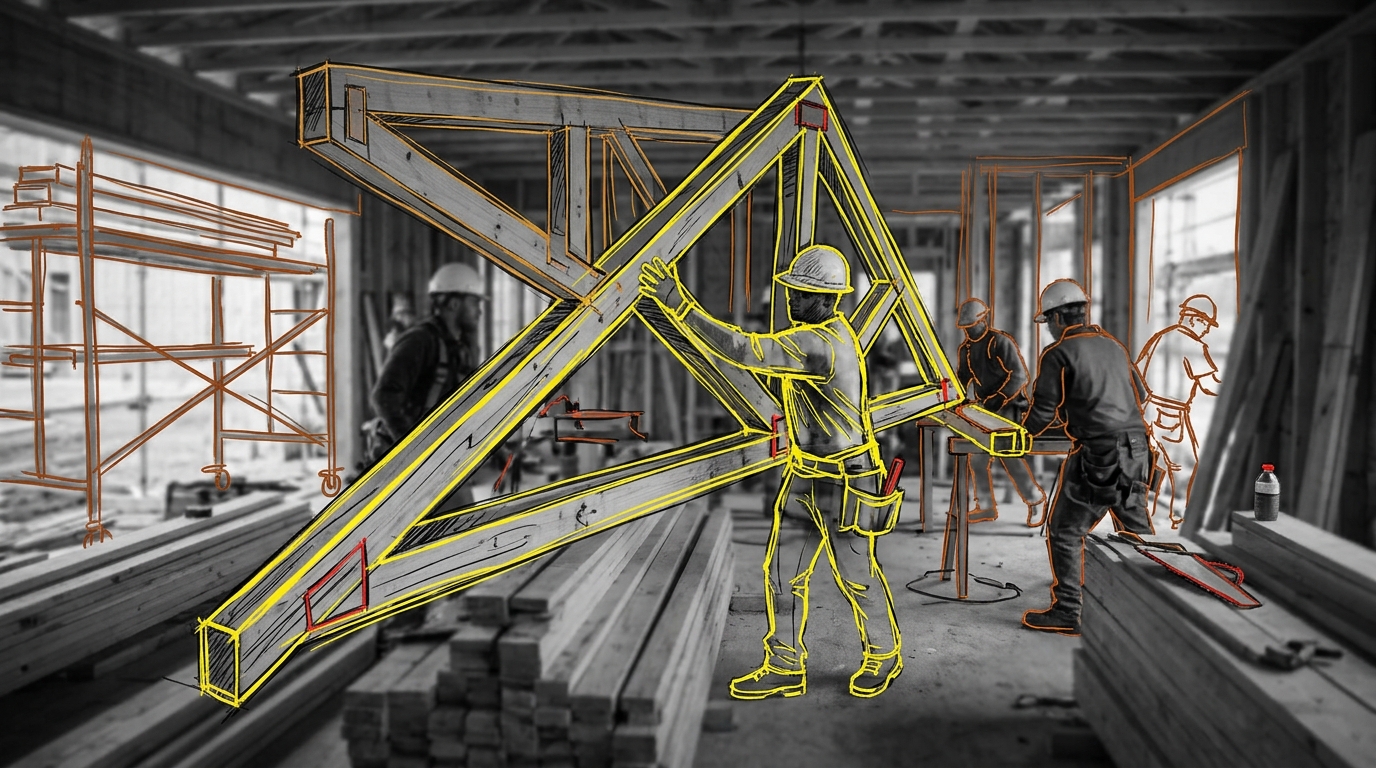
For trade workers, CHF offers paid access for skilled trade workers to find and apply to construction jobs. You can see more on the Jobs for Trade Workers page.
Here is how it works. Contractors and other employers post jobs at no cost. Skilled trade workers browse them at no cost. Workers pay when they apply. Employers pay to see who applied and to reach them. Then the two sides talk directly and make their own deal. The platform connects two parties and does nothing else. You can read how the work is done on the Job Board for Contractors | Construction Help Finder page.
So the fee comes at the moment you apply, not while you're looking around.
First Contact: A Short Phone Screen

Expect a short phone call first. FirstHR's construction hiring kit says to start with a ten-minute phone screen, because the risk that a person won't show up rules candidates out faster than any gap in skill. The call checks for that risk before an hour of foreman time goes into an interview at the site.
The same kit says to do the phone screen first, always, and to stop the call when an answer rules the person out. Then skills and safety get checked together, in one visit, at the yard or on a site. A TaskTag hiring guide puts it this way: "If anything disqualifies them, end here. Don't bring in someone you already know won't work."
So answer the call, and be honest about when you can start and how you'll get to the job. You can read the kit at Construction Worker Interview Questions and Scorecard. To learn how to spot a listing that comes straight from the contractor, read Five Signs a Job Listing Comes Straight From the Contractor.
Questions an Employer Can and Can't Ask
California puts limits on what an employer may ask you.
Salary history
The California Labor Commissioner's Office says an employer generally cannot ask you about your salary history, including your pay and benefits. It doesn't matter whether they ask out loud or in writing, or whether they ask themselves or through an agent.
The law does not stop an employer from asking what salary you expect for the job you're applying for. That question is allowed.
Criminal history
Under the California Fair Chance Act, you don't have to share your criminal history or go through a background check until the employer has made you a conditional job offer. After a conditional offer and a background check, the employer may be concerned about a conviction that is directly related to the job. If so, you get the chance to do three things:
- Explain what happened.
- Give mitigating or rehabilitative evidence, meaning things that show your situation or progress.
- Challenge whether the background check report is correct.
You can see the Fair Chance Act Sample Forms from the California Civil Rights Department.
Physical ability
FirstHR's kit keeps the rule simple. When an employer asks about physical demands, the questions should be about your ability to do the job. They should never be about a medical condition, a disability, or a health history.
The kit also says any physical ability test must be given to every candidate for the role. It must match duties that are really part of the job, and it must come at the same stage of the hiring process for everyone.
A Paid Practical Test for Key Hires

For key hires, you may be asked to do a short paid test on a job site. A TaskTag guide says a 30-minute paid test at a job site tells an employer more than any interview.
That means the test is your chance to show the work itself, not just talk about it.
If you're asked, go ready to work.
Form I-9 Paperwork in Your First Days
Form I-9 is the Employment Eligibility Verification form, and you'll see it in your first days. Section 2 is the employer's part. The employer, or an authorized representative, has to complete and sign it. The hire date means your first day of work for pay. The table below shows when Section 2 is due.
| Situation | Rule |
|---|---|
| Standard hire | Section 2 completed and signed within 3 business days of the hire date (the first day of work for pay) |
| Paid work starts on a Monday | Section 2 done by Thursday of that week |
| Job lasts less than 3 days | Section 2 done no later than the first day of work for pay |
| Section 2 done after the offer is accepted but before paid work starts | Employer enters the date the employee expects to start |
| Rehired more than three years after the original Form I-9 | A new Form I-9 must be completed |
You can fill out Section 1 before your first day of work. You cannot fill it out before you accept a job offer.
Bring original documents that are acceptable and not expired. They have to prove who you are and that you're allowed to work. You can show either one selection from List A, or one selection from List B plus one selection from List C.
Where does the form go? Don't mail completed forms to U.S. Citizenship and Immigration Services or to Immigration and Customs Enforcement.
A TaskTag guide says Day 1 paperwork should be finished before the new hire touches a tool.
For more, read Completing Section 2, Employer Review and Attestation and the Instructions for Form I-9 (01/20/25).
The Written Hire Notice California Requires
Since January 1, 2012, California employers have had to give each employee a written notice at the time of hiring, with some exceptions. "At the time of hiring" can be a date the employer and employee agree on, but the notice can never come later than your start date for work. Private contractors and subcontractors on public works projects have to give it too, under Labor Code 2810.5, just like all private-sector employers.
What the notice says
The notice has to carry specific information. One item is your rate or rates of pay and what the pay is based on. That could be by the hour, shift, day, week, salary, piece, commission, or otherwise, with any overtime rates, as they apply.
The notice also says you may earn paid sick leave, and that you may ask to use up to 5 days or 40 hours, whichever is greater, of the sick leave you earned, per year.
And it must say if a state or federal emergency or disaster declaration covers the county or counties where you'll work, was issued within 30 days before your first day of work, and may affect your health and safety on the job.
Language and changes
Your employer needs to give you the notice in the language it normally uses to talk with you about job matters. If anything in the notice changes, Labor Code section 2810.5(b) says the employer must tell you in writing within seven calendar days after the changes.
To learn more, read the Wage Theft Protection Act – Notice to Employees FAQ and look at the Notice to Employee (Labor Code section 2810.5) template.
Your First Weeks: Early Quits and No-Shows
Early turnover is common in construction. A TaskTag guide says half of all construction worker turnover happens in the first 90 days. You can read the guide at How to Hire Construction Workers: Job Postings, Interviews, and Onboarding That Stick.
In the Associated General Contractors of America's 2025 survey, the second most-cited hiring problem, at 48 percent, was that new hires fail to show up or quit shortly after starting.
If an Employer Asks About Your OSHA Card
An employer may ask about your Occupational Safety and Health Administration (OSHA) Outreach student course completion card. If you want to show it's real, you can give the name and contact information of the authorized trainer who issued it. Each authorized outreach trainer has to keep records on their training for five years.
Whether to accept a training certificate instead of a student course completion card is up to the employer or job site. To get your training ready to show, see What to Include in a Trade Profile Before You Start Applying.
Frequently Asked Questions
Will I be paired with someone during my first week?
Maybe. A TaskTag guide tells employers to pair new hires with an experienced crew member for the first week. Ask your employer if that's the plan for you.
Can the employer tell me which I-9 documents to bring?
No. Employers have to let all employees choose which acceptable documents to show for Form I-9. Your employer must physically examine the documents, or examine them in a way that follows an alternative procedure authorized by the Secretary of Homeland Security. Pick your documents and bring the originals.
What if I don't want to sign the hire notice?
If an employer wants a signature and you don't want to sign, the employer should still give you the notice and note your refusal on its own copy. Read the notice before you decide.
Does the board check my background before an employer sees my application?
No. The board does no checking of anyone and no screening, and no license is needed on either side. Ask the employer how its hiring will go.
Ready to Apply?
You apply, the employer reaches out, and the phone screen comes next. A short paid practical test may follow. Then come the I-9 and the written hire notice, which California employers have had to give each employee at the time of hiring since January 1, 2012, with some exceptions.
Workers pay when they apply, and employers pay to see who applied and to reach them. The two sides talk directly and make their own deal. Construction Help Finder is a job board that connects employers and skilled trade workers for construction work in Southern California. Are you ready to find work in your trade? Get Started