What to Do When a Bid Wins But Your Trade Crew Falls Through
When a winning bid's planned trade crew falls through, the contractor's first move is to quickly line up replacement subcontractors or workers, tell the client what's happening, and rework the schedule and staffing plan so the job doesn't stall. This isn't a rare headache: in the 2026 AGC/NCCER survey, 42 percent of firms said shortages of their own or subcontractors' workers had delayed projects, making workforce shortages the most commonly cited cause of project delays. That statistic underlines why a contractor can't treat a crew falling through as a one-off surprise to improvise around after the fact — it's common enough that having a fallback plan in place before the bid is won matters. The practical sequence is straightforward: identify which scopes of work are short-staffed, reach out immediately to alternate subcontractors or individual trade workers who can fill the gap, communicate proactively with the client about any timeline impact before it becomes visible on site, and update the project schedule and staffing plan to reflect the new crew lineup. Waiting to see if the original crew resolves itself, or hoping the gap closes on its own, tends to compress the timeline further and increase the odds of visible delay. Contractors who build in a short list of backup trade contacts, and who know where to look for available workers on short notice, recover from a crew falling through much faster than those who start that search cold after the problem appears.
Why Trade Crews Fall Through After a Bid Is Won
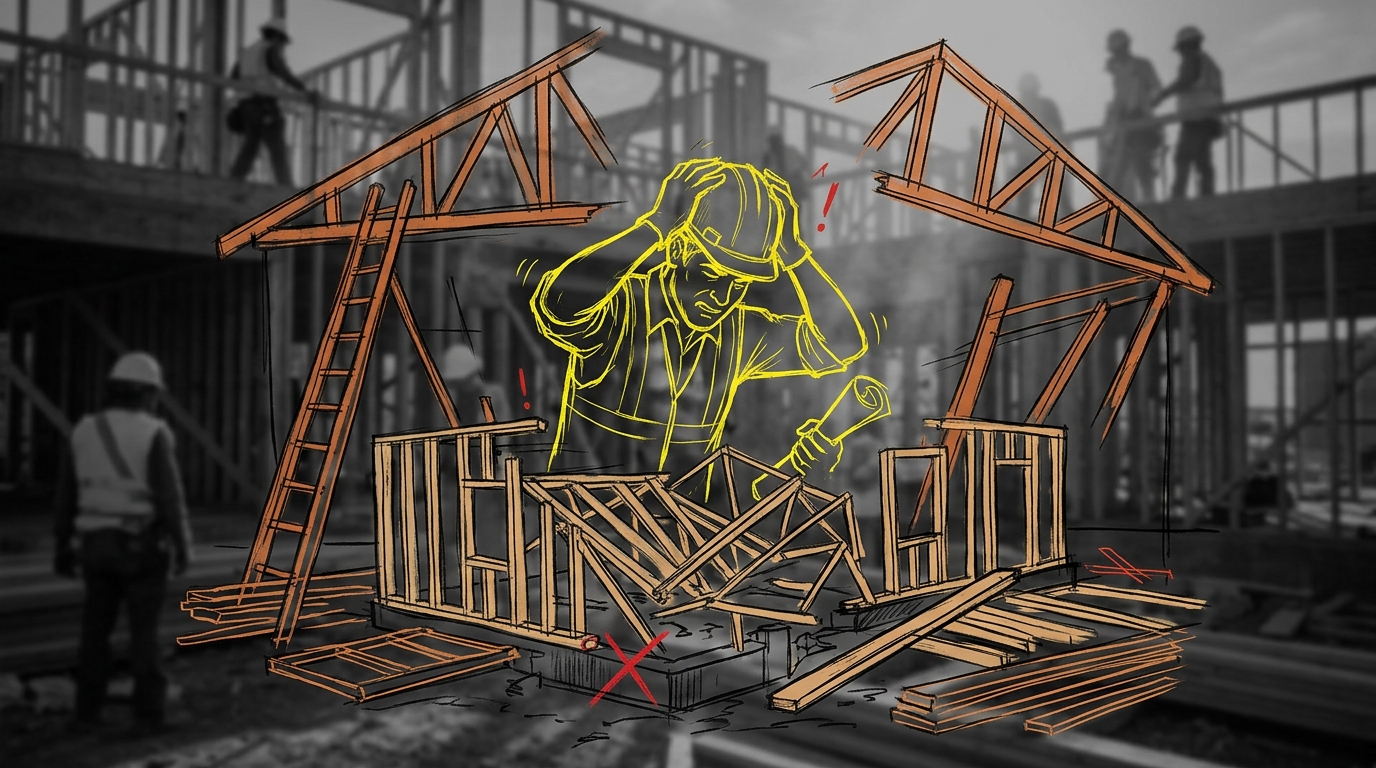
It helps to understand that a crew falling apart after a bid is won usually isn't a fluke tied to one bad subcontractor or one unreliable worker — it's a reflection of broader pressure across the construction labor market. Quits in U.S. construction rose by 56,000 in August 2025, a sign that workers are leaving jobs. That kind of movement doesn't stop just because a general contractor has a signed contract and a schedule built around a specific crew.
The 2026 AGC/NCCER survey shows a few more reasons crews come apart between the bid and the start of work. Twelve percent of firms said workers left or didn't show up because of actual or rumored immigration actions, and 16 percent said subcontractors lost workers of their own (Associated General Contractors of America). Put together, these numbers describe a labor environment where the crew a contractor priced into a bid weeks or months earlier may simply not be the crew available when the work actually starts. You can't predict which worker or subcontractor will drop out. You can predict that someone will. A contractor bidding commercial work in Southern California should expect, as a matter of course, that some portion of jobs will require a crew substitution before or during the work, not treat it as an edge case.
If the Job Is a California Public Works Contract: Subcontractor Substitution Rules
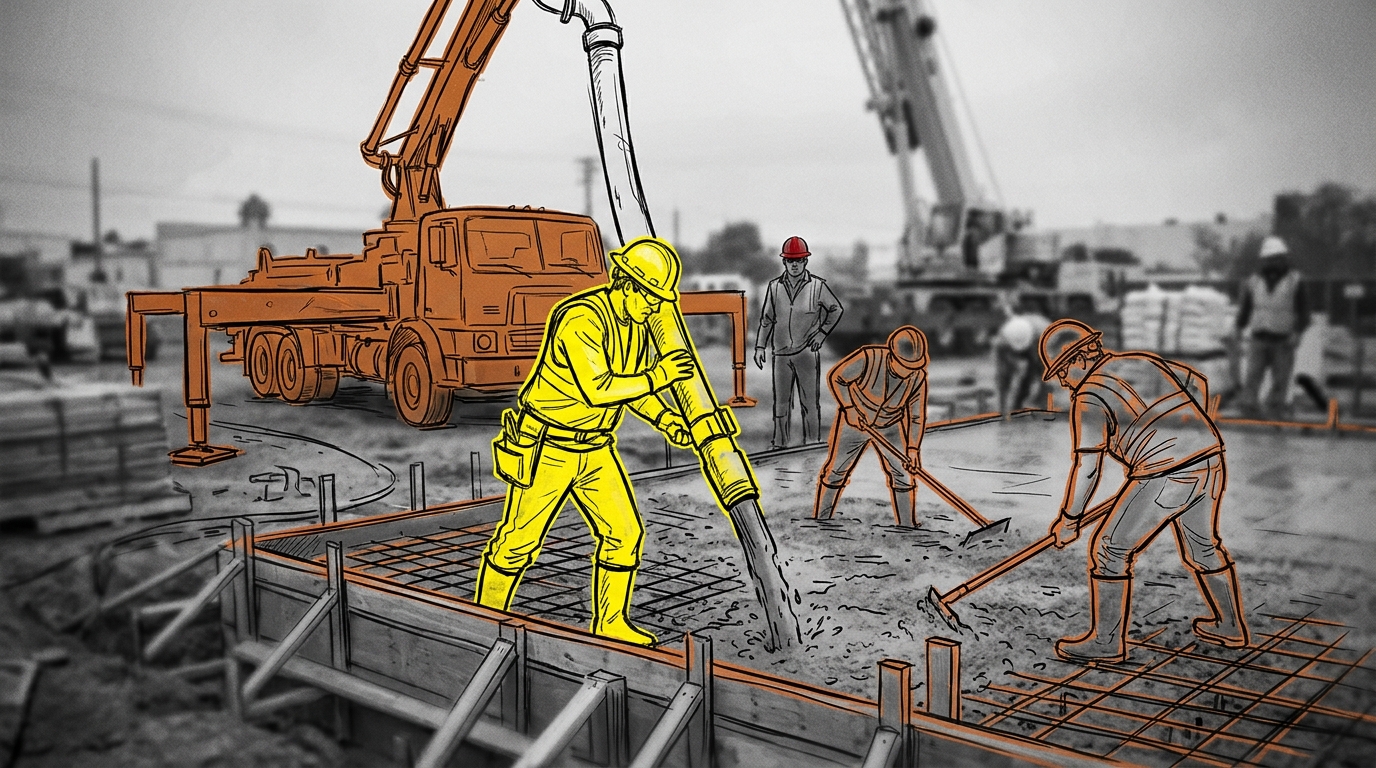
Public works jobs in California have their own rules, and those rules matter the moment a listed subcontractor becomes unavailable.
On a California public works bid, substitution of a listed subcontractor is allowed in certain circumstances, and one of them is directly relevant to crews falling through: it's permitted when a listed subcontractor, given a reasonable opportunity, fails or refuses to sign a written contract for the scope and price in its bid (California Public Contract Code section 4107 (2025)). In other words, if the subcontractor the prime counted on balks at formalizing the deal, the prime has a legal path to bring in a replacement.
That path has a procedural step the awarding authority must follow before any substitution is approved. Before approving a substitution, the awarding authority must notify the listed subcontractor in writing of the request and the reasons, by certified or registered mail (California Code, Public Contract Code). Contractors working mostly on private commercial jobs won't hit this process at all, but anyone who bids both public and private work needs to know the difference going in — the same quick swap that works on a private job can trigger a formal, documented substitution process on a public one.
Covering Apprentice Shortfalls and Paperwork on Public Works Projects

Crew gaps on public works jobs aren't limited to journey-level trade workers — apprentice staffing has its own set of rules, and falling short there creates its own kind of delay if it isn't handled promptly. On California public works, contractors who don't get enough apprentices from their first request must request them from every other apprenticeship committee in the project area. This groundwork is covered in more depth in a companion guide on lining up trade workers before a big bid in Southern California, which walks through apprenticeship sourcing before a bid is even submitted.
Paperwork deadlines matter here too. After a public works contract award, contract award information (DAS-140) must go to the apprenticeship committee within 10 days, and no later than the first day workers are on the project.
Finding Replacement Trade Workers Quickly

Once the legal and procedural pieces are sorted — substitution notices sent if the job is public works, apprenticeship requests filed if needed — the practical task is still the same: find trade workers who can start soon. A job board built specifically for construction trades gives that search somewhere to start beyond cold calls and scattered referrals.
Construction Help Finder does not supply, assign, place, employ, or pay anyone. What it does is connect employers — general contractors and trade business owners — with skilled trade workers looking for work, so a contractor scrambling to cover a gap can reach them directly rather than starting from zero. The contractor still handles the hiring conversation, the terms, and the payment arrangement; the platform's role is making the connection possible, not standing behind any part of what happens after.
A contractor who's already worked through a pre-bid checklist for lining up extra trade workers, and who has a sense of how to expand a crew quickly after winning bigger work, tends to treat a crew falling through as a solvable logistics problem rather than a crisis that threatens the whole project.
Frequently Asked Questions
Can a prime contractor just swap in a different subcontractor whenever they want on a public works bid?
No. On California public works bids, the prime contractor may list only one subcontractor for each portion of work as the prime itself defines that portion in the bid. Substitution outside the allowed circumstances isn't simply a matter of preference once the bid is submitted.
Is early turnover among new workers common enough to plan for?
Yes. AGC's 2026 survey found that 83 percent of firms had at least some turnover among new field employees within their first 90 days. That makes early turnover a near-universal planning factor rather than an exception.
Who do I call for apprenticeship questions in Southern California?
The Division of Apprenticeship Standards' Los Angeles regional office can be reached at 213-576-7750, and the San Diego regional office at 619-767-2045.
Keep a Backup Plan Ready Before You Need It
A winning bid losing its crew isn't a sign something went wrong in the estimate — it's a predictable risk in a labor market where construction quits rose by 56,000 in August 2025 and subcontractors are losing their own workers. The contractors who weather it best are the ones who move fast: lining up alternate trade workers, keeping the client informed before the delay becomes visible, following the specific substitution and apprenticeship rules when the job is public works, and treating a job board built for the trades as a standing resource rather than a last resort. Winning the bid is only the first step; keeping the crew in place — or quickly replacing the part that isn't — is what actually gets the job finished on schedule. To post your opening and reach skilled trade workers directly, Get Started.