
Signs Your Electrical Job Post Isn't Reaching Enough Candidates
Your electrical job post usually isn't reaching enough qualified candidates because electricians are the hardest construction craft to hire right now, and the shortage is a skills-and-credentials gap, not just a lack of applicants. In the AGC-NCCER 2026 workforce survey, electricians ranked as the hardest craft workers to find nationally, with 81 percent of firms seeking them reporting difficulty filling the role. Half of respondents in that same survey said available candidates lack the needed skills, certificates, or licenses for the position. That means a quiet inbox or a stack of mismatched applicants isn't necessarily a sign your post is broken — it may reflect a tight labor market for this exact trade across the country right now. Still, employers can control what's inside their control: where the post is placed and how the posting process is set up. The rest of this article walks through those checkpoints one at a time, using current national hiring-difficulty data as context so you can tell the difference between a market-wide problem and a posting problem that's fixable today, and adjust your approach accordingly before assuming nothing can be done about low response.
Electricians Are the Hardest Trade to Hire Right Now

If you've posted an electrician job and heard nothing but crickets, you're not alone. An AGC market insights director told HCAMag that contractors find electricians the hardest of all construction occupations to hire, followed by HVAC technicians, pipefitters, and welders. That ranking matters because it reframes the question. Instead of asking "what's wrong with my post," the more useful first question is "how does my post compare to the market reality for this specific trade?" That doesn't mean you should stop improving your listing — it means you should calibrate your expectations before concluding the post itself is the problem. For a broader look at how employers typically find electricians in the first place, it helps to start with an overview of electrician hiring options for contractors before troubleshooting any single posting.
Why Applicants Don't Match the Job: The Skills-and-Credentials Gap

Scarcity is only half the story. The other half is a mismatch between who applies and what the job actually requires. In AGC's 2025 survey, 57 percent of firms said available candidates were not qualified because they lacked essential skills or did not have the right certificate or license for the position. That's a majority of employers describing the exact frustration many contractors feel when they scroll through applicants who simply aren't ready for the role posted.
The pressure isn't isolated to small pockets of the industry, either. In that same 2025 survey, 88 percent of firms that directly employ craft workers had openings for craft workers, and 83 percent of firms with craft openings said those positions were as hard or harder to fill than a year earlier. In other words, the difficulty is widespread and, for most firms with craft openings, as hard or harder than a year earlier.
And it isn't unique to electrical work. AGC's 2025 survey asked about 18 specific crafts, and for every single one, a majority of respondents whose firms employ that craft reported it hard to fill. Hard-to-fill craft positions run across the trades, not just electrical work. If you're wondering whether a single board is enough to reach the applicants who do exist, posting on multiple trade boards for better reach is often the more realistic strategy once you understand how thin the qualified pool really is.
Is the Whole Labor Market Shifting Under You?
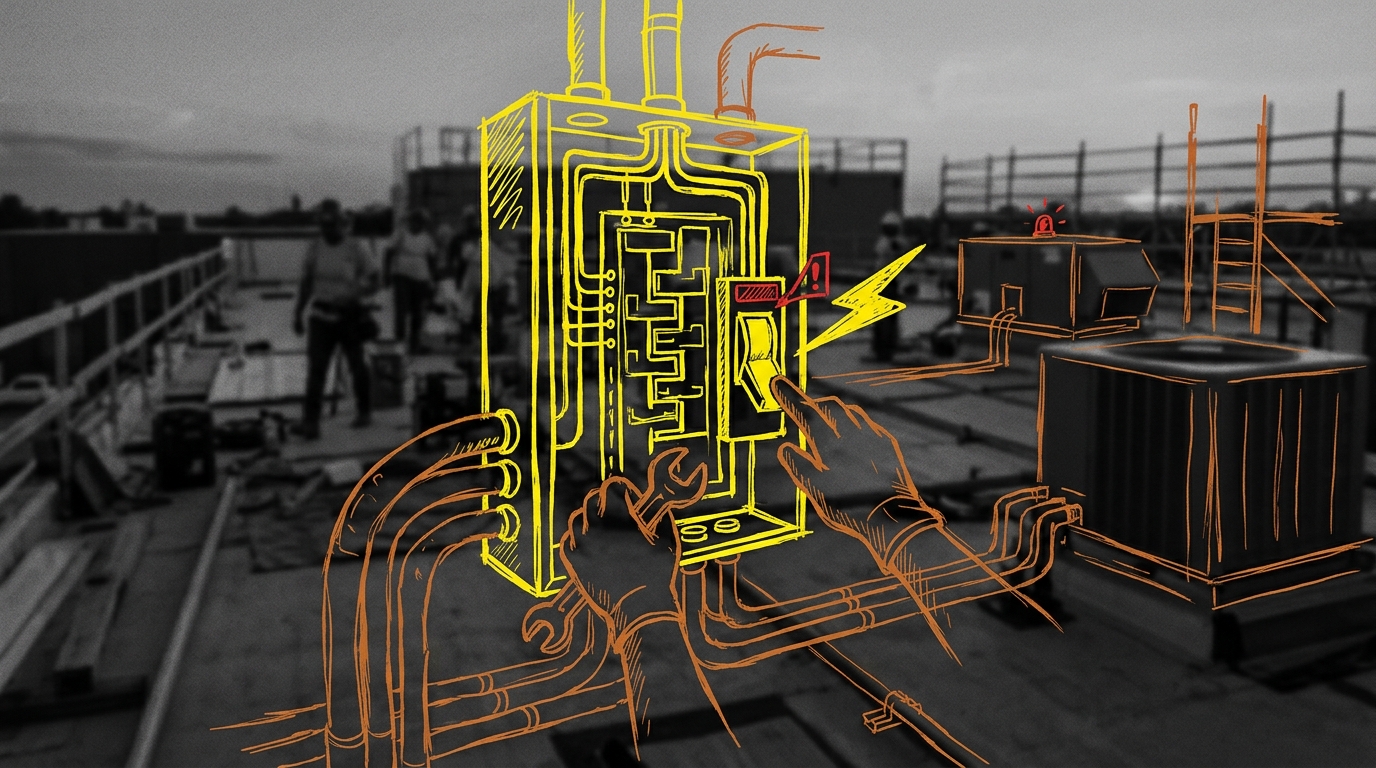
Beyond the skills gap, there's a second layer worth watching: movement in the labor market itself. Two numbers from the same month tell a useful story. U.S. construction job openings fell by 115,000 in August 2025. At the same time, quits in U.S. construction rose by 56,000 in August 2025. Read together, these aren't contradictory — they describe a workforce in motion.
For an employer posting a job, this matters practically. Watching these broader signals, alongside your own applicant numbers, helps you separate a market blip from a genuine posting problem.
Check Where You're Posting: Trade-Specific vs. General Boards

One cause you can check is simply where the post lives. Every job listed on Construction Help Finder is construction, which means an electrician browsing the platform isn't filtering through irrelevant postings to find yours — they're already looking at work in their field.
Placement matters even more in a region where the available pool is already constrained by outside pressures. SCAG identified key barriers facing Southern California's workforce, including lack of affordable housing, limited access to reliable and affordable transportation, skills mismatch, and inadequate access to affordable child and family care. The region these barriers cover isn't small — the SCAG region spans six Southern California counties (Imperial, Los Angeles, Orange, Riverside, San Bernardino, and Ventura) across more than 38,000 square miles. These aren't hiring-platform problems — they're regional realities that shrink the number of workers who can realistically take a given job, regardless of how well it's posted. A tradesperson who can't reliably get to a job site, or who can't line up child care around a shift schedule, may never apply even if your listing is excellent. Recognizing these barriers doesn't fix them, but it does explain part of why a seemingly strong post still underperforms, and it reinforces why placing the listing where trade workers actually look is one of the few variables fully within your control. If you haven't reviewed the mechanics of a strong listing recently, publishing a job listing that reaches available workers is a practical next step before changing anything else.
Check Your Post's Setup: Free Posting, Paid Contact

Before troubleshooting further, it's worth confirming you understand how the posting process itself works. On Construction Help Finder, posting and browsing are free, and making contact is the paid product. That structure means there's no cost barrier to getting your job listing live and visible to browsing trade workers — the investment comes later, when you're ready to actually connect with a candidate. Confirming this setup is a quick, no-cost way to rule out a basic process issue before assuming the worst about candidate interest.
Frequently Asked Questions
Is it normal for firms to get unqualified applicants?
Yes. AGC's 2025 survey found 57 percent of firms said available candidates were not qualified because they lacked essential skills or the right certificate or license for the position. This is a widely reported issue, so unqualified applicants alone don't prove your job post is the problem.
Are open electrician positions harder to fill than before?
For most firms, they're at least as hard. In AGC's 2025 survey, 88 percent of firms that directly employ craft workers had openings, and 83 percent of firms with craft openings said those positions were as hard or harder to fill than a year earlier.
Is this hiring difficulty unique to electricians?
No. AGC's 2025 survey asked about 18 specific crafts, and for every one of them, a majority of firms that employ that craft reported it hard to fill, so the challenge spans the trades.
What does falling job openings alongside rising quits mean for hiring?
In August 2025, U.S. construction job openings fell by 115,000 while quits rose by 56,000. More construction workers were leaving jobs that month while fewer openings competed for them.
Does Construction Help Finder only list construction jobs?
Yes. Every job posted on Construction Help Finder is construction-related, which means electricians searching the platform are seeing postings relevant to their trade rather than wading through unrelated listings.
Getting Your Post in Front of the Right People
A quiet electrician job post is rarely one simple mistake — it's usually some combination of a genuinely tight national labor market, a credentials gap between applicants and requirements, regional barriers that limit who can take the job, and sometimes a mismatch between where the post lives and where electricians actually look. Separating these causes is the real work: a post that's placed well on a construction-specific job board, clearly worded, and realistically timed has done everything within an employer's control, even when the broader market stays tight. From there, put your listing on a job board for the trades, in front of workers already searching for construction work: Get Started.