Questions to Ask a Finish Carpenter During a Phone Interview
"Finish Carpenter" is one of the job titles O*NET OnLine lists for the carpenter occupation, and one listed task is installing windows, frames, floorings, trim or hardware with carpenters' hand or power tools. The U.S. Office of Personnel Management says you can ask candidates about their roles and duties at past or current jobs, what they like and dislike about their work, and their job knowledge and other job-related experience.
What a Finish Carpenter's Work Covers
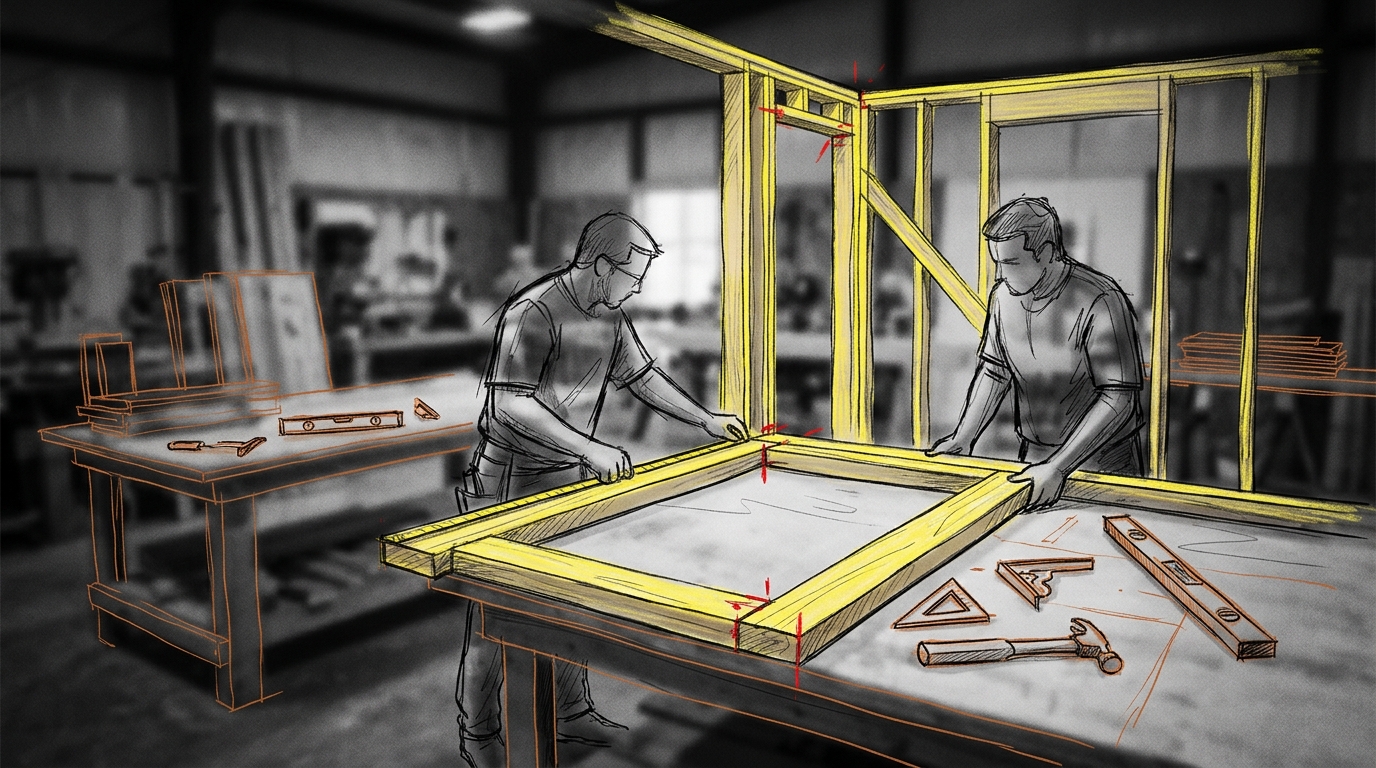
Good questions start with the real work. O*NET OnLine's 47-2031.00 - Carpenters listing lays it out. "Finish Carpenter" is one of the job titles on it, along with Bridge Carpenter, Cabinet Maker, Concrete Carpenter, Form Carpenter, Rough Carpenter and Scaffold Builder.
The listing says a carpenter builds, puts up, installs or repairs structures and fixtures made of wood and similar materials. Think concrete forms and building frameworks like partitions, joists, studding and rafters. Think wood stairways, window and door frames, and hardwood floors too. Carpenters may also install cabinets, siding, drywall, and batt or roll insulation.
Four of the listed tasks hand you questions to ask:
- Trim, frames and hardware. Carpenters install structures or fixtures such as windows, frames, floorings, trim or hardware, using carpenters' hand or power tools.
- Plans. Carpenters study blueprints, sketches or building plans. They use them to set up the project layout and to work out the sizes and materials they need.
- Plumb and level. Carpenters check that a structure is true, meaning straight and level, with a plumb bob and a level.
- A safe, clean work area. Carpenters follow set safety rules and regulations and keep their work area safe and clean.
Each of these can turn into a question for your call.
Ask Every Candidate the Same Questions in the Same Order
The U.S. Office of Personnel Management (OPM) says that in a structured interview, all candidates are asked the same questions in the same order. It says unstructured interviews are very subjective. That makes them less accurate and opens the door to legal challenges. It also says research consistently shows unstructured interviews have little value in predicting how well someone will do on the job.
So write your questions down before the call, and read them the same way to every candidate. If you're weighing a call against a visit to the job, see Phone Interview vs. Site Visit: Screening a Framing Candidate.
OPM's Structured Interview Guide has rules for writing the questions. Whatever the format, the questions should be:
- Tied to the competencies found through a job analysis
- Realistic about the duties of the job
- Open-ended
- Clear and short
The guide also says a structured interview typically checks four to six competencies. A competency is a job skill or ability. The exception is a job that is unique or at a high level. For a finish carpenter, the task list above is a good place to draw yours from.
Questions That Draw Out Real Project Experience

Weigh real, proven, hands-on experience above everything else in a hire. That's why you should build the whole call around past projects and let the other questions sit around them.
The table below lines up four kinds of questions and what each one draws out of a candidate.
| Question Type | What It Draws Out |
|---|---|
| Behavioral question | Past behavior under similar circumstances, the best predictor of future behavior on the job |
| STAR-model question | Situation or task, action, and result |
| Situational question | How the candidate would respond to a realistic job scenario or dilemma |
| Consequence-of-error question | Work where 50% of surveyed carpenters rated the consequence of error "Extremely serious" |
Questions About Past Projects
Behavioral questions rest on a simple idea from OPM. The best predictor of how someone will act on the job in the future is how they acted in the past in similar situations.
OPM also recommends a three-part model for answers:
- Situation or Task: the context or background for the event, or the tasks involved.
- Action: exactly what was done, or what would be done.
- Result: the consequence of the candidate's actions.
I don't take a claim of expert-level skill at face value. I've seen plenty of people say they can handle work they can't, and I know real ability shows up fast once the work starts. So before I hire, I ask for specifics about projects the person has actually finished. I ask what the job was, what they did with their own hands, and how it turned out. If the details stay vague, I don't believe the claim. For more on this, see How to Judge a Framer's Tool Proficiency Without Seeing Them Work.
Scenario Questions
OPM says situational questions give the candidate realistic job scenarios or hard choices and ask how they would respond. For a finish carpenter, you could describe a trim run that won't sit flush, or a frame that's out of plumb. Then ask what they'd do.
Precision, Error and Teamwork
O*NET OnLine shares survey responses from carpenters, and they show you what to probe:
- 67%, about two out of three, rated the importance of being exact or accurate "Extremely important."
- 94% said they have face-to-face discussions with individuals and within teams "Every day."
- 50%, half, rated the consequence of error "Extremely serious."
You can ask about each one. Ask how they check their own work. Ask what happened the last time a cut or measure was off. Ask how they talk with the crew and the other trades on a busy day.
Topics You Can and Can't Raise on the Call

OPM's How to Conduct a Successful Interview training lists what you can and cannot ask.
You can ask candidates about:
- Their specific roles and duties at past or current jobs
- What they like and dislike about their work
- Their job knowledge and other job-related experience
You cannot ask candidates about their:
- Age
- Sex
- Race
- National origin
- Religion
- Marital or family status
- Disabilities or health status
- Any other factor that has nothing to do with the job
California Limits on Criminal History Questions
In California, the Fair Chance Act limits what you can ask. The California Civil Rights Department describes it as a law that generally prohibits employers with five or more employees from asking about conviction history before they make a job offer.
Under this law, you can't put questions about conviction history on a job application before a conditional job offer. You also can't ask about or consider criminal history before that offer. So keep those questions out of your phone call.
Say you make an offer and later decide to take it back because of criminal history. You have to tell the person in writing. You have to give them a copy of any conviction history report you relied on. And you have to give them at least five business days to respond. The Fair Chance Act: Criminal History and Employment FAQ has the details.
Talking Pay: Expectations Yes, Salary History No
California lets you talk about pay, just not past pay. Under California Labor Code § 432.3, you can't ask an applicant for their salary history, including pay and benefits. That's true whether you ask out loud or in writing, and whether you ask yourself or through someone else. You also can't use salary history to decide whether to offer a job or how much salary to offer.
Here's what the law allows and requires:
- Ask about expectations. You can still ask what salary the person expects for the job they applied for.
- Share the pay scale. Upon reasonable request, you must give the applicant the pay scale for the job.
- Voluntarily shared pay history. If an applicant shares past pay on their own, without being asked, the law does not stop you from using it when you set that person's salary.
So on the call, ask what pay the carpenter is hoping for, and leave past pay alone.
Training Programs a Southern California Carpenter May Mention
A candidate may name a local program. Here's what two of them say about themselves.
- Southern California apprenticeship. Associated Builders and Contractors, Southern California Chapter, says that while you work for one of the employers in its program, you get at least 150 hours of classroom training a year.
- Los Angeles Trade-Tech carpentry program. Los Angeles Trade-Tech College says that students who meet the program requirements will have the knowledge and skills they need for a career as a carpenter in construction or maintenance.
If a candidate names one, treat it as a place to start asking. Ask what they built, what they learned, and which jobs they worked on. Then go back to your project questions.
Construction Help Finder is a job board built for the construction trades, and employers post jobs at no cost. You can read more on the Carpenters & Framers page. The Job Board for Contractors | Construction Help Finder page explains how the work is done.
Frequently Asked Questions
Can I ask a finish carpenter whether they speak a second language?
Yes, if it's critical to the job. The U.S. Office of Personnel Management says you can ask whether a candidate speaks a foreign language if a valid job analysis shows it's critical to doing the job well.
How long does a candidate have to file a Fair Chance Act complaint?
Three years. A candidate has three years from the time an employer breaks the Fair Chance Act to file a complaint with the California Civil Rights Department.
What is the penalty for breaking California's salary history or pay scale rules?
The California Labor Commissioner can order an employer to pay a civil penalty (a fine) of at least $100 and at most $10,000 for each violation.
Does Construction Help Finder check a carpenter's background or skills?
No. Construction Help Finder does no vetting and no screening. It connects employers and skilled trade workers, and the interview and every check are up to you. Use your own structured questions to learn what a carpenter can do.
Build Your Call Around the Work
Start with past projects. The best predictor of how someone will act on the job in the future is how they acted in similar situations in the past. Ask every candidate the same questions in the same order. Stay on job topics, keep conviction history and salary history out of the call, and ask about the pay they're hoping for instead.
Construction Help Finder is a job board that connects Southern California construction employers with skilled trade workers. It does no vetting or screening, so the interview and every check stay with you. Ready to post your finish carpentry job? Get Started.