How to Judge a Framer's Tool Proficiency Without Seeing Them Work
NIOSH and OSHA say the bottom line is this: "contractors should check the tool label and manual for manufacturer-specific trigger names and operating information." The U.S. Office of Personnel Management says work sample tests "require applicants to perform tasks or work activities that mirror the tasks employees perform on the job." In California, "the employer shall ensure that only qualified persons who carry valid operator's cards for the tools used be permitted to operate powder-actuated tools." Powder-actuated tools drive fasteners using a powder charge.
The Check Is Yours: Construction Help Finder Doesn't Screen Framers
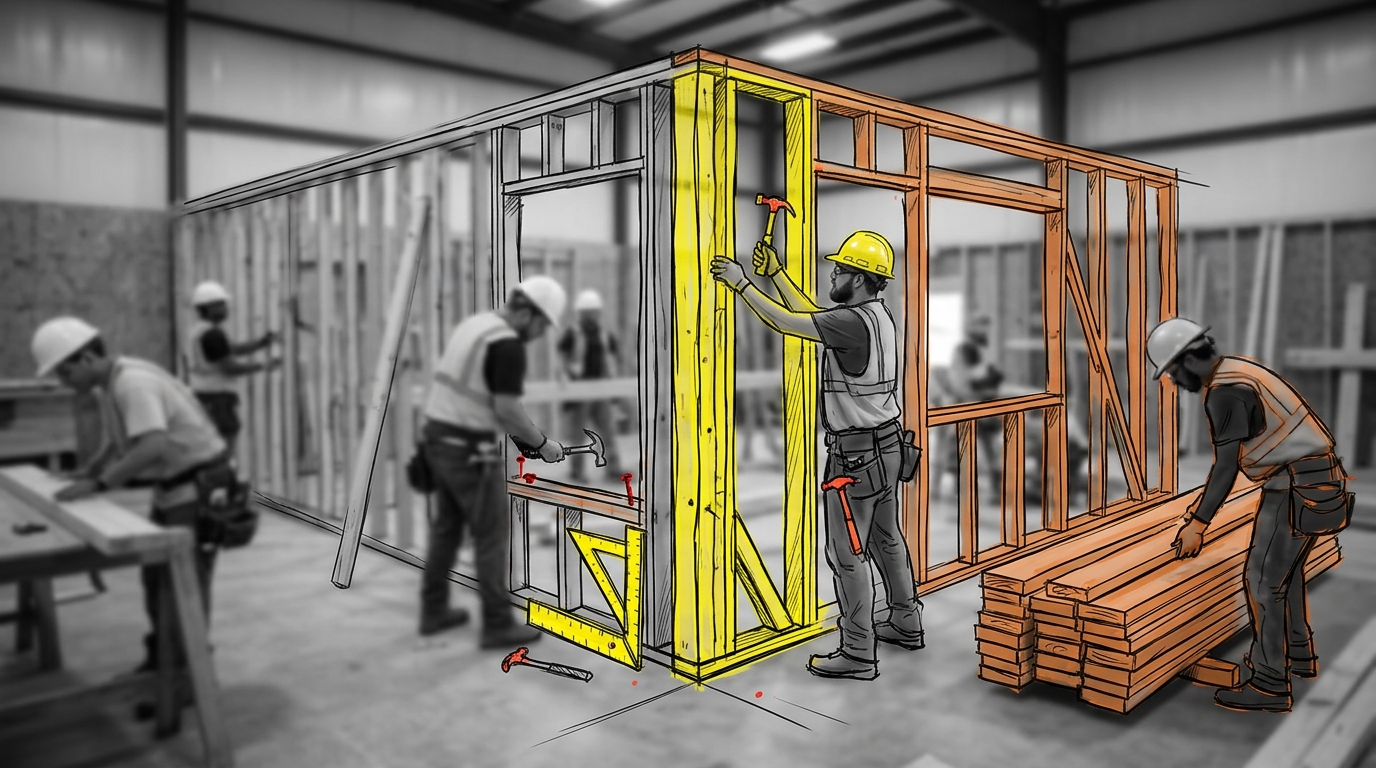
Construction Help Finder says it plainly: "There's no vetting and no screening, and no license is needed on either side." Vetting means checking people's backgrounds. "Either side" means you as the employer and the worker. So when a framer tells you they're good with tools, you're the one who checks.
The employers Construction Help Finder serves "are on job sites, not behind a desk." Its main service is paid access for construction employers. These are general contractors and trade business owners who need skilled workers for a project.
Don't take a claim of expert-level work at face value. Before you hire, ask for specifics about projects the person has actually finished.
Since the check is yours, the questions below are yours to ask. Two of them are about the tools.
Want to know how to reach framers in the first place? Read Reaching Wood and Metal Framers Directly: What to Know Before You Start.
Ask About the Tools: Nail Gun Triggers and Powder-Actuated Tool Cards
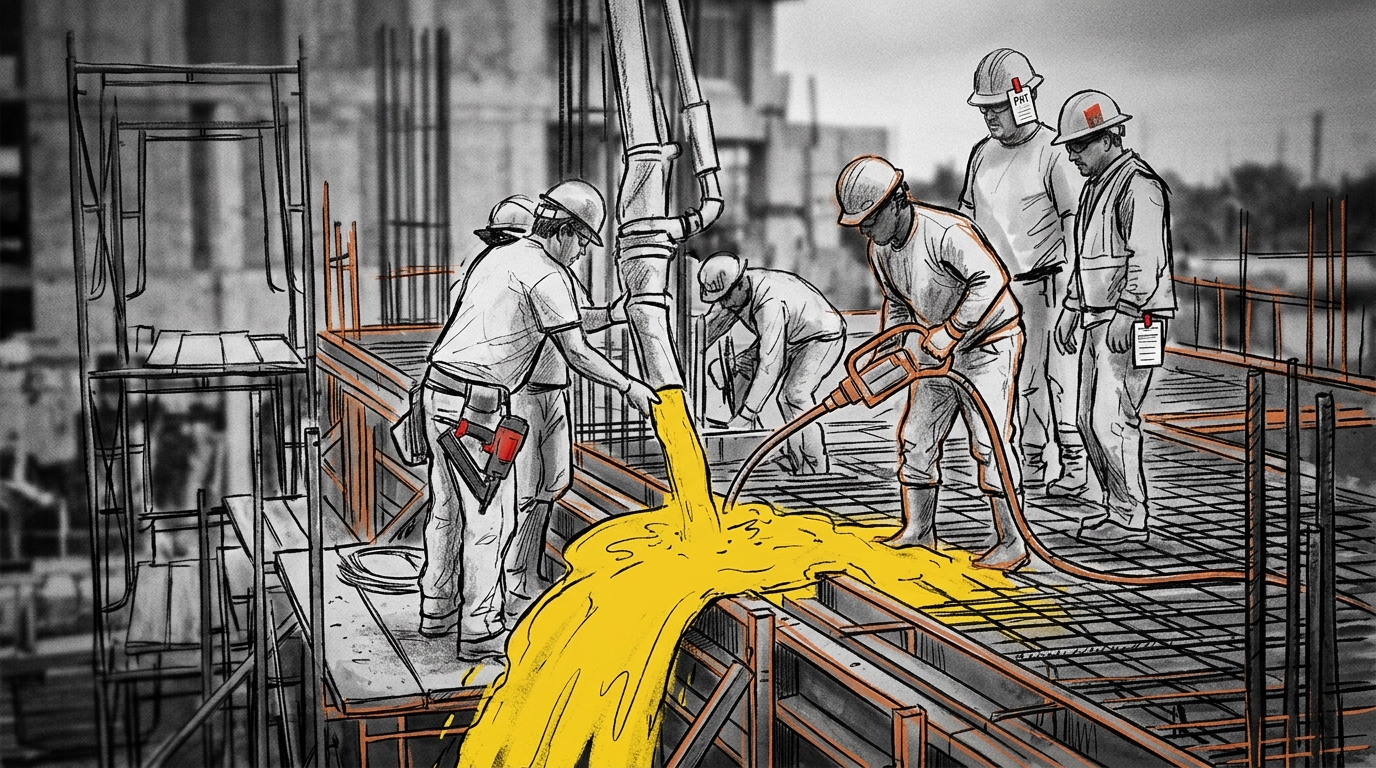
Start with two questions. Ask which trigger the framer runs for placement work. Then ask whether they carry a valid operator's card for the tools they use. You can put these to framers you find through the Job Board for Contractors | Construction Help Finder page. The Carpenters & Framers page is another place to look.
Nail Gun Triggers
Nail gun injuries are common. The National Institute for Occupational Safety and Health and the Occupational Safety and Health Administration put out a guide, Nail Gun Safety: A Guide for Construction Contractors. It says one study found that 2 out of 5 residential carpenter apprentices had a nail gun injury over a four-year period. Residential carpenter apprentices are new carpenters in training who work on homes.
The guide also says about two-thirds of nail gun injuries in residential construction happen during framing and sheathing work. The National Institute for Occupational Safety and Health lists the same guide as Nail Gun Safety: A Guide for Construction Contractors (2011).
The risk of a nail gun injury is twice as high with a multi-shot contact trigger nail gun as with a single-shot sequential trigger nail gun. The guide says that, at a minimum, you should provide full sequential trigger nail guns for placement work, where the lumber needs to be held in place by hand. So a good question to ask is, "Which trigger do you use when you hold the lumber by hand?"
The guide's bottom line is to check the tool's label and manual for the maker's own names for triggers and how the tool works. Ask the framer to name the trigger on the gun they use, then check the answer against the label and manual.
The table below sets out what the guide says about each trigger type.
| Trigger Type | Risk Level | Recommended Use |
|---|---|---|
| Multi-shot contact trigger | Twice the injury risk of a single-shot sequential trigger | Not stated |
| Full sequential trigger | Not stated | At a minimum, for placement work where the lumber is held in place by hand |
Powder-Actuated Tool Cards
In California, the employer has a job to do here. The California Department of Industrial Relations rule, Title 8, Section 1685. Operator and Instructor Qualifications (Powder-Actuated Tools), says you must make sure that only qualified people who carry a valid operator's card for the tools they use are allowed to run powder-actuated tools. Those are tools that drive fasteners using a powder charge.
So ask the framer, "Do you carry a valid operator's card for this tool?" Then ask to see the card.
Ask What They've Built and How They Learned
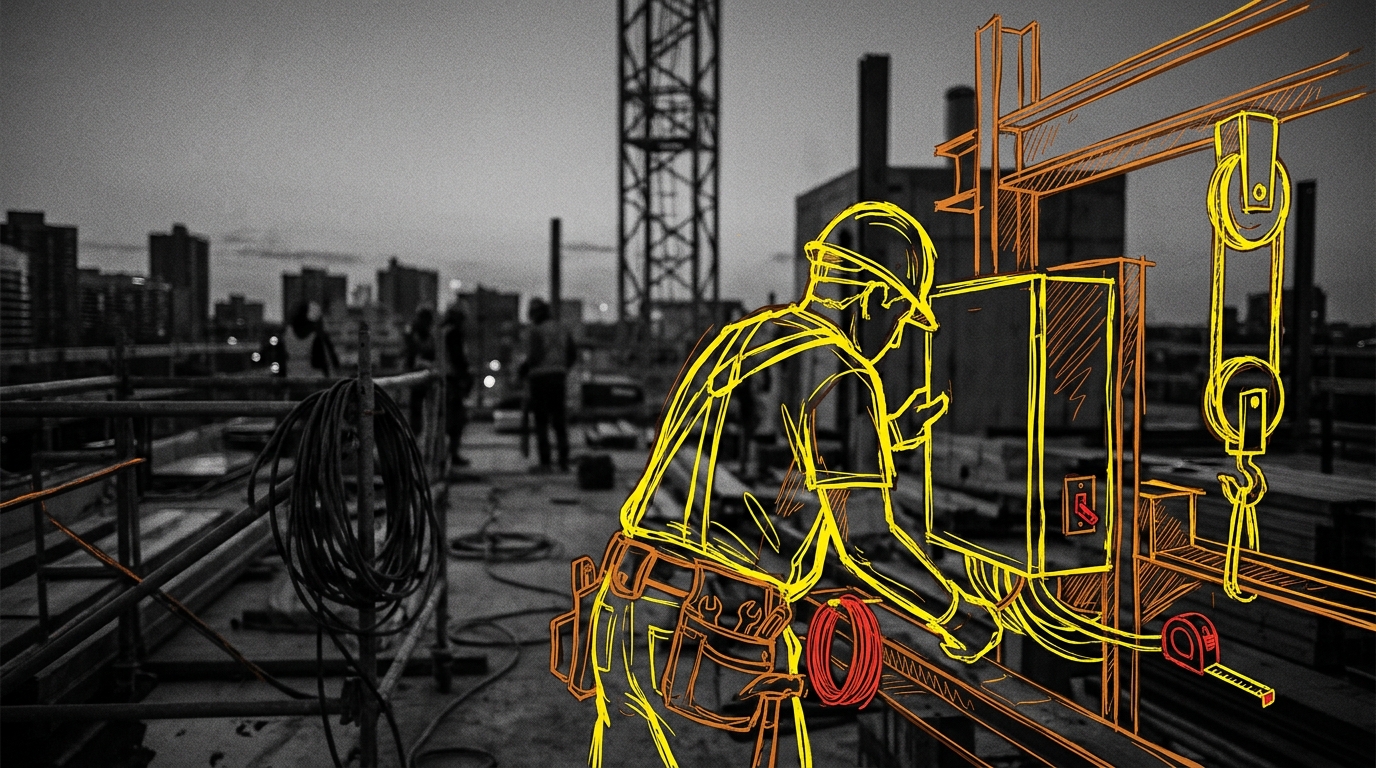
Put real, proven, hands-on experience above everything else in a hire. It's the prize all hiring is really after. So ask the framer what they've built and how they learned to do it.
The military's carpenter apprenticeship standard makes a handy yardstick. The Construction Carpenter RAPIDS 0067D Work Processes from the U.S. Military Apprenticeship Program (USMAP) includes this task: "assemble and fasten materials to make frameworks or props, using hand tools, power tools, and wood screws, nails, dowels pins, or glue."
Ask the framer about jobs where they did work like that. Which tools did they use, and what did they build?
The same standard calls for related instruction: "Trade related On-The-Job-Training (OJT) or Any Trade related schools/courses totaling 288 or more hours." So ask how they learned. Was it on the job, in a class, or both? Then ask how long it took.
Work-Sample Questions When You Can't Watch Them Work
Work sample tests make job applicants do tasks or work activities that copy the tasks employees do on the job. The U.S. Office of Personnel Management explains this on its Work Samples and Simulations page.
They fit one case. They should only be used when applicants are expected to already have the skills the job needs on the day they start. A framer who says they're ready to frame on day one is that case.
They also cost something. Work samples may be time consuming and expensive to run, because people are needed to watch applicants, and sometimes to score how each one did.
The U.S. Office of Personnel Management also gives estimated validities. Validity is a score for how well a test predicts job performance. Cognitive ability tests, which test mental ability, have an estimated validity of 0.51. Work sample tests come in at 0.54.
When you can't watch someone work, ask a question that comes close to a sample: "Walk me through how you would frame this wall, step by step."
Order the Checks: Cheap Questions First
Using just one way to measure applicants tends to find people who are strong in one area. It may miss people who have high potential in other areas. So use more than one check.
The U.S. Office of Personnel Management describes a multiple-hurdle approach, where applicants pass through several steps. The cheapest assessments come first to shrink the applicant pool. Slower checks that take more work come later, when fewer candidates are left.
You can read more in Designing an Assessment Strategy.
For a framer, that means asking the quick questions first. Ask about triggers, cards, and past projects. Save the costly checks for the finalists. If you plan to hire a whole crew, read Evaluating a Lead Framer's Crew Before You Commit.
Frequently Asked Questions
Why does training matter so much with nail guns?
Training is one of the important factors in nail gun injuries. The National Institute for Occupational Safety and Health says "the type of trigger system and the extent of training are important factors." So ask a framer which trigger they use and how they were trained.
Who can issue a powder-actuated tool operator card in California?
Qualified instructors can issue the card, or people the Division accepts. The rule says those instructors must carry a valid, authorized instructor card issued by the tool maker. When a framer shows you a card, ask who issued it.
Is a work-sample check reliable enough to lean on?
Yes, but don't make it your only check. The U.S. Office of Personnel Management, citing Biddle (2005), says a validity coefficient of 0.30 or higher is generally considered useful for most circumstances. That 0.30 is the cutoff for "useful." The estimate for work sample tests is 0.54, so it clears that cutoff.
Use work samples along with your other questions.
Where do union carpenters train in the Inland Empire?
The Western States Carpenters Training Fund lists a location in Ontario at 3250 E. Shelby Street, Suite 137, Ontario, CA 91764. You can ask a framer whether they trained there.
Find Framers You Can Judge for Yourself
Start with the cheap questions about triggers, cards, and past projects, then save the costly checks for the finalists. That's the multiple-hurdle approach, and it keeps your time on the people who matter.
Construction Help Finder's main service is paid access for construction employers. That means general contractors and trade business owners who need skilled workers for a project. If that's you, you're the one who judges the framers. Ready to find framers for your next job? Get Started