How Direct Contact With a Contractor Speeds Up Hiring Decisions
Construction Help Finder (CHF) connects employers and skilled trade workers, then gets out of the way. Best Hiring Software says hourly candidates rarely apply to one employer. They apply to four in an afternoon and accept whoever moves first with something credible. A George Mason University study of freelancers found that even a one-hour delay in replying nearly halved a freelancer's chance of being hired. Replying after more than 24 hours was equivalent to not replying at all.
Why Hiring Speed Matters in Construction Right Now

Start with how many firms are looking. In the 2025 survey by the Associated General Contractors of America (AGC), 88 percent of firms that directly employ craft workers reported openings for craft workers. That's close to nine in ten. Four fifths (80 percent) of firms had openings for salaried workers.
Filling those openings is the hard part. ENR reports on the 2025 Workforce Survey published by AGC and the National Center for Construction Education and Research. In it, more than 9 in 10 companies (92 percent) reported difficulty hiring for open positions.
That shortage shows up on the job. AGC says worker shortages are respondents' most-commonly listed reason for project delays. Forty-five percent of respondents report project delays due to shortages of their own workers or their subcontractors' workers.
Nearly two-thirds of construction firms (62 percent) plan to expand their headcount in the next 12 months. Only 7 percent expect to reduce headcount in the same period.
Good people get picked up fast, too. ABC SoCal says voluntary quits in construction have surged while layoff rates stay low. So when a site supervisor or safety person leaves, they aren't sitting idle. Competitors absorb them within days. For more on work in this region, read Steady Construction Work in Southern California: What to Know Before You Start.
Hourly Candidates Take the First Credible Offer
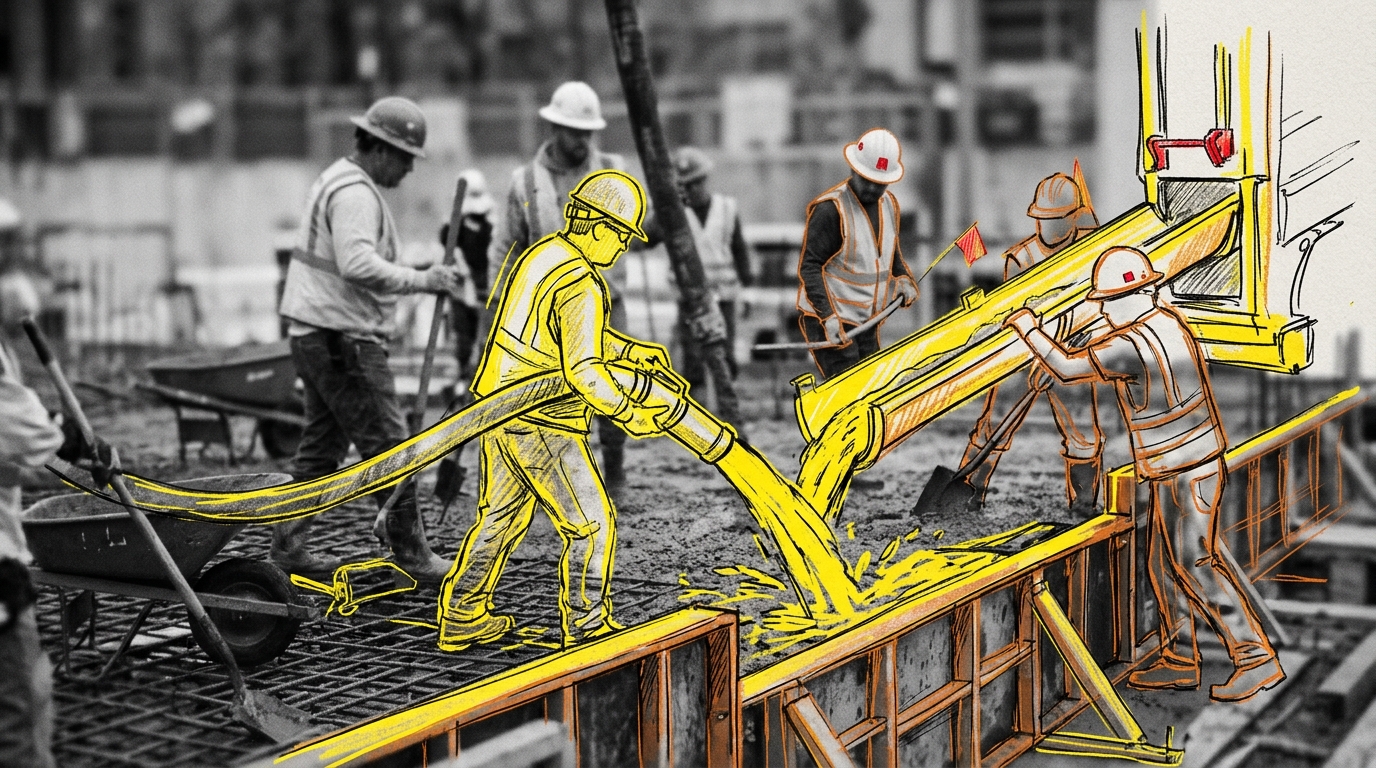
Best Hiring Software says hourly candidates rarely apply to just one employer. They may apply to four in one afternoon, and they accept whoever moves first with something credible.
HRBench says the same thing about tight labor markets: when workers are hard to find, the company that makes the offer and closes it first wins. You can read how it lays that out on its page, Offer to Acceptance: Formula, Benchmarks & Why Days Matter.
What Direct Contact Means Here: Employer and Worker Talk Without a Go-Between

Direct contact means you and the worker talk to each other. No one sits in the middle. Construction Help Finder connects employers and skilled trade workers, then gets out of the way.
For contractors, CHF offers paid access for construction employers to find and connect with skilled trade workers. That is the paying side of the board.
The employers Construction Help Finder serves are on job sites, not behind a desk. If you want to see how a direct board treats pay, read Why Direct Job Boards Keep More of Your Hourly Wage.
How Reply Speed Affects Who Gets Hired

Slow replies cost hires. A George Mason University study of freelancers found that even a one-hour delay in replying nearly cut in half a freelancer's chance of being hired. A reply after more than 24 hours was the same as no reply at all. The university's news story is Why quick responders have the edge on the job hunt.
The researcher, Hart, explains why. Faster replies make hiring more likely because how fast someone replies is a sign of how quickly that person will respond in the future.
Pin looked at more than 200,000 email conversations between hiring contacts and candidates. Candidates were 23% more likely to keep the conversation going when they got an answer within an hour than when the answer took more than three days. Pin's guide is How to Improve Candidate Experience: A Data-Backed Guide.
Best Hiring Software gives you a number to track: the hours from when someone applies to first contact from a real person. The guide says this one number predicts hourly hiring success better than anything else, better than time-to-hire or cost-per-hire. Get it under four working hours, it says, and most other problems shrink.
The table below puts the three findings side by side.
| Finding | Source and scope |
|---|---|
| A one-hour reply delay nearly halved the chance of being hired, and replying after more than 24 hours was the same as not replying | George Mason University study of freelancers |
| Candidates were 23% more likely to keep talking when the reply came within an hour than when it took over three days | Pin, on recruiter replies to candidates |
| Get application-to-first-human-contact under four working hours | Best Hiring Software's target for hourly hiring |
Where Hiring Time Gets Lost: Scheduling and Slow Decisions
Construction already hires fast. inFeedo compared industries, and construction came out with the fastest hiring time at 12.7 days. The source says that speed comes from straightforward job requirements. You can see the benchmark in Average Time to Hire by Industry: Benchmark Your Recruitment Process.
Time still leaks out, and scheduling is one place. inFeedo calls interview scheduling a major bottleneck. It typically takes 30 minutes to two hours for each candidate.
Best Hiring Software says the back-and-forth over interview times is usually the longest delay when you hire hourly workers. Its guide, How to Hire Hourly Workers Fast, says the fix is to set fixed interview times each week. That removes the delay completely.
Deciding late is the other leak. The guide says that if you interview on Tuesday and decide on Friday, you will lose people. Set your hiring standard ahead of time, and where you can, make the offer at the end of the interview.
The table shows where the time goes.
| Hiring step | What the data shows |
|---|---|
| Time to hire in construction | 12.7 days, the fastest of the industries compared |
| Interview scheduling | 30 minutes to two hours per candidate |
| Scheduling back-and-forth in hourly hiring | Usually the longest delay in the process |
| Deciding days after the interview | Loses people; set the bar in advance and offer at the end of the interview where you can |
Want to see this from the worker's side? Read What Happens After You Apply to a Direct Job Listing.
Why a Small Charge Keeps the Contact Pool Serious
Construction Help Finder puts a small cost on both sides of the connection, on employers and on workers. That way everyone in the pool has something at stake.
So when you reach someone through Construction Help Finder, they've put something in too.
Why the Founder Built It This Way
James Wright, the founder, has done masonry for more than 30 years. Masonry is building with brick, block, or stone. Most days he's still doing masonry work.
He built CHF because he needed workers for his own projects, and there wasn't a good way to find them. In his words: "I created this b/c I needed workers for my projects and there wasn't an effective way to find these people."
In his words: "I created this b/c I needed workers for my projects and there wasn't an effective way to find these people."
That's where the site comes from: a working mason with a hiring problem.
Commutes, Housing and Other Southern California Hiring Barriers
Southern California has its own hiring barriers. scag.ca.gov names the key ones: a lack of affordable housing, limited access to reliable and affordable transportation, skills mismatch, and not enough access to affordable child and family care. Skills mismatch means the skills people have don't match the skills needed.
Commute times are an especially big issue here. Nearly 85 percent of the jobs in the region can't be reached within a 45-minute commute, even though many people have access to a car.
Drive time, housing and child care are worth bringing up early in a hiring conversation. If you're a trade worker, take a look at Jobs for Trade Workers. If you're an employer, the Job Board for Contractors | Construction Help Finder page explains how the work is done.
Frequently Asked Questions
Should an employer text or email a trade worker who applied?
Text. Best Hiring Software says hourly candidates reply to email poorly, but they reply to text messages far better. A reply the same afternoon often wins a candidate who had two other applications open.
Are employers outside construction struggling to hire too?
Yes. SHRM says more than two thirds of organizations (69 percent) are still struggling to fill roles. That matches 2016 levels, after a peak in 2022.
How many contractors have trouble filling hourly craft jobs?
Over 80 percent, which is more than 8 out of 10. ABC SoCal says that many contractors report difficulties filling hourly craft positions.
Are salaried construction roles as hard to fill as craft roles?
Almost. In the Associated General Contractors of America's 2023 construction industry survey, 88 percent of firms with openings said they had a hard time filling craft positions. 86 percent said they had trouble filling salaried openings.
Who is Construction Help Finder's main service for?
Construction employers. The main offer is paid access for general contractors and trade business owners who need skilled workers for a project.
Reply First, Hire Faster
Hourly candidates rarely apply to just one employer. They may apply to four in one afternoon, and they accept whoever moves first with something believable.
Construction Help Finder connects employers and skilled trade workers, then gets out of the way. When the two sides reach each other directly, nothing stands between a fast reply and your hiring decision.
Construction Help Finder is a construction job board in Southern California. It helps you find skilled trade workers, and it helps workers find construction work in their trade. Ready to reach the other side directly? Get Started