
Direct Listings vs Reposted Ads: What's the Difference?
A job board holds postings that employers submitted directly to it. An aggregator collects postings that live somewhere else. On a job board, the listing is the original. On an aggregator, it is a copy that can fall out of date. When you click a listing on a job aggregator, it typically sends you to the employer's original job post, so your application goes in through the way the employer prefers.
What a Direct Employer Listing Is

A direct listing is the original post. The employer sends it straight to the job board.
Job Boardly says traditional job boards host these original postings. They charge employers to post openings, and they keep direct ties with those employers.
The employer also keeps a record in its applicant tracking system, which is its hiring software. JobsPipe explains that this is the record the employer edits, so it shows a change in a job's status fastest. Its apply link goes to the real application, not to a go-between.
How Aggregators Collect and Copy Listings
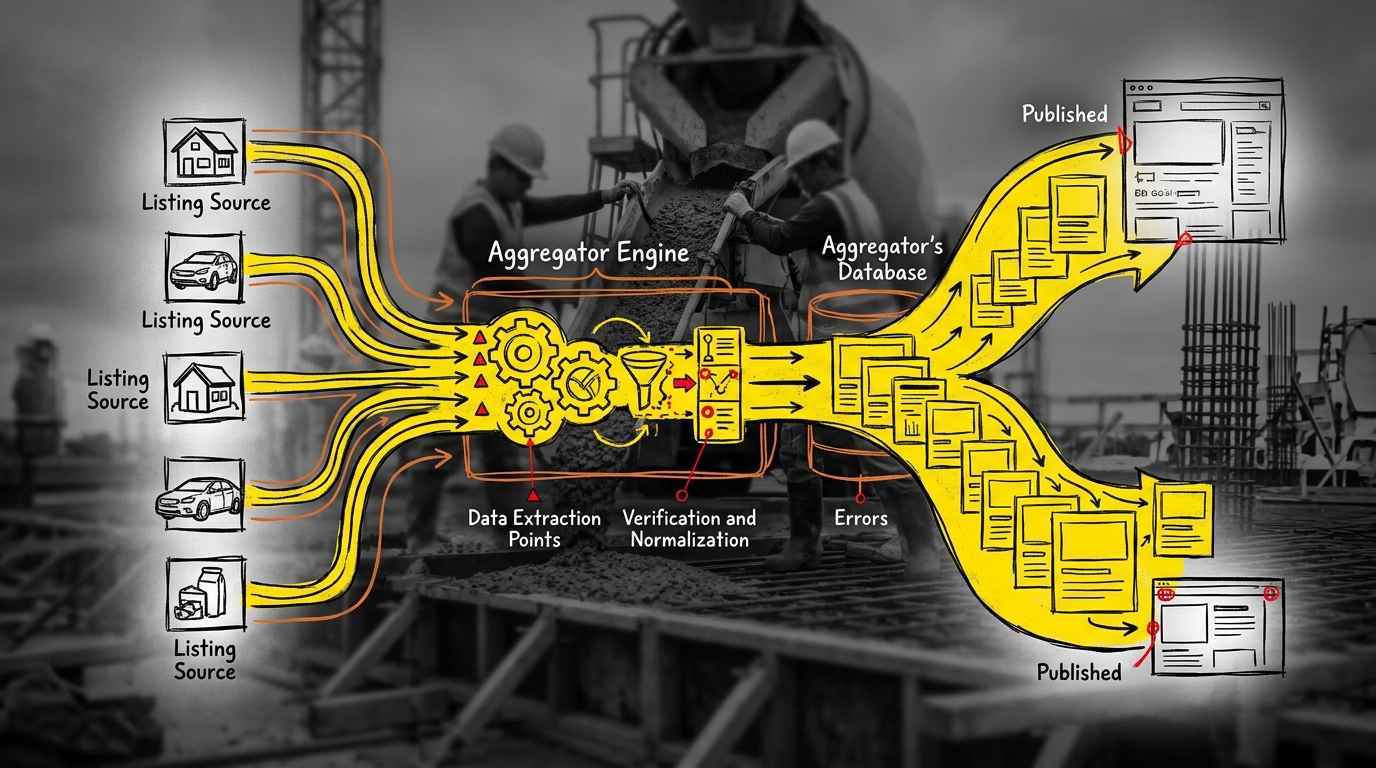
Aggregators work differently. Job Boardly says job board aggregators collect existing job postings from many sources into one central database. Those sources include other job boards, company websites and staffing agencies.
The most common way they do it is job board scraping. Automated bots visit job boards, company career pages and staffing agency websites. They pull out details like job titles, descriptions, locations, salaries and posting dates.
Employers often post the same job on many sites. That's why aggregators also use duplicate detection algorithms. These are computer steps that find the same job on more than one site and merge the listings into one.
The money side is different too. Instead of charging employers up front to post jobs, aggregators often use a performance-based advertising model.
If you want to read more, see Job Board Aggregator: How It Works from Job Boardly and The best job posting data providers in 2026 from Bloomberry.
How Direct Listings and Copied Ads Compare

JobsPipe says a job board holds postings that employers submitted directly to it. An aggregator collects postings that live somewhere else. On a board, the listing is the original. On an aggregator, it's a copy that can fall out of date.
Job Boardly adds that aggregators differ from regular job boards because they pull listings from other sources. You get more jobs, but less control over the listings.
The table below puts the two side by side.
| Feature | Direct listing on a job board | Aggregated ad |
|---|---|---|
| Who submits it | The employer, directly to the board | Collected from where it lives elsewhere |
| Which copy it is | The original | A copy that can drift out of date |
| Control and volume | More control over listings than an aggregator | Less control over listings, higher job volume |
You can read more about Ghost job on Wikipedia.
Why Copied Ads Go Stale or Lead Nowhere
Scraped listings go out of date the worst, says JobsPipe. Nothing tells the crawler when a job closes. The crawler is the program that collects the listings, so the aggregator has to crawl the page again to find out.
Apply links can fail too. Check where an aggregator's apply link goes. Does it go to the employer, or to another page on the aggregator?
The second costs the job seeker an extra step. It's also the most common reason an apply process hits a dead end.
Ranking isn't only about fit. On aggregators, where a job ranks reflects paid deals as well as how well it fits the search. How many of an employer's jobs you see depends on whether the employer bought placement.
For the full write-up, read Job aggregator sites: where each one actually gets its listings from JobsPipe.
How to Trace an Ad Back to the Employer
Tracing a copied ad takes two steps. Follow the apply link, then find the original posting date.
For more on direct listings, read Five Signs a Job Listing Comes Straight From the Contractor and What Happens After You Apply to a Direct Job Listing. If you work in the trades, look at Jobs for Trade Workers. If you're hiring, see how the work is done on Job Board for Contractors | Construction Help Finder.
Following the Apply Link
When you click a listing on a job aggregator, it typically sends you to the employer's original job post. Job Boardly says that way your application goes in through the way the employer prefers.
There's another way in. When This Job Was Posted says that if the Indeed listing shows the company's own careers-page link, you can paste it in directly. To get it, click "Apply on company site." That always lands on the official posting date kept in the employer's applicant tracking system.
Finding the Original Posting Date
Hiring systems like Greenhouse, Lever, Ashby, Workday and others save the first creation time when a job is created. When This Job Was Posted explains that this time can be pulled out through the system's API, which is a way for other software to get its data. That time is the ground truth, and it can't be manipulated.
For more, see How to Tell If a Job Posting Is Old or Reposted from When This Job Was Posted.
What Google's Job Search Rules Say About Copies
Google Search Central says Google doesn't allow ads dressed up as job postings. That includes postings made by a third party, such as an affiliate program.
Expired job postings aren't allowed either. Google says you should ideally remove them from your website.
Some sites have several copies of the same job posting at different web addresses. For those, Google says to use canonical URLs on each copy of the page. A canonical URL is a tag that points to the main version.
You'll find the full rules in Job posting (JobPosting) structured data for Job Search from Google Search Central.
Job Wrapping: Copying With the Employer's Consent
Job wrapping is not the same as plain aggregation. Job Boardly says it's narrower and more controlled. It links to one employer's applicant tracking system or career site, which is the software the employer uses to manage job postings. The link works by a feed or by crawling the site, and it's usually set up with that employer's knowledge. It updates on a schedule, so it matches the employer's live postings.
You can read more in Job Board Aggregator: How It Works from Job Boardly.
Frequently Asked Questions
Can a big site like Indeed be both a job board and an aggregator?
Yes. JobsPipe says most large job sites are both. Indeed takes direct postings and also collects postings from other places. LinkedIn does the same.
How do aggregators clear out filled jobs?
They use continuous monitoring systems that re-crawl their sources, which means checking them again and again, to find jobs that were filled or removed. Job Boardly says automated expiration protocols then remove outdated listings after a certain timeframe.
If I see the same job on three sites, is it three openings?
No. JobsPipe says if the same job is posted in an applicant tracking system, a feed and a job board, it's one job, not three.
Can I filter job data to see only employer-sourced postings?
Yes, if you use JobsPipe. Bloomberry says it lets you narrow your searches by source. You can pull only postings that come straight from employers' applicant tracking systems, or leave out the aggregators completely.
Direct Listings Are the Original; Copies Can Go Stale
On a job board, the listing is the original. On an aggregator, it's a copy that can fall out of date. Aggregators pull listings from other sources, so you get more jobs but less control over the listings.
Construction Help Finder is a job board that helps construction employers fill crews with skilled trade workers, and helps trade workers find construction work, in Southern California. Ready to post or find a job in the trades? Get Started