
Pay Rate Ranges That Get Industrial Electricians to Apply
Employers hiring industrial electricians can set a pay range by starting from published wage data and the rules that apply to the job, rather than guessing. The national median annual wage for electricians was $63,190 in May 2025, which gives employers a starting benchmark to price an industrial role against. In AGC's 2023 survey, 81 percent of construction firms said they had raised base pay rates for their workers during the past year. On California public works, DIR's prevailing wage determinations set required minimum hourly rates that vary by county, classification, and shift, and apprentice rates may be paid only to registered apprentices working in their own craft. Employers with 15 or more employees must also state the pay scale in every job posting. The sections below walk through the wage benchmarks, prevailing wage rules that apply on public works, apprentice pay rules, and how employers can set and disclose a pay range based on current wage data.
What the Wage Data Says About Electrician Pay
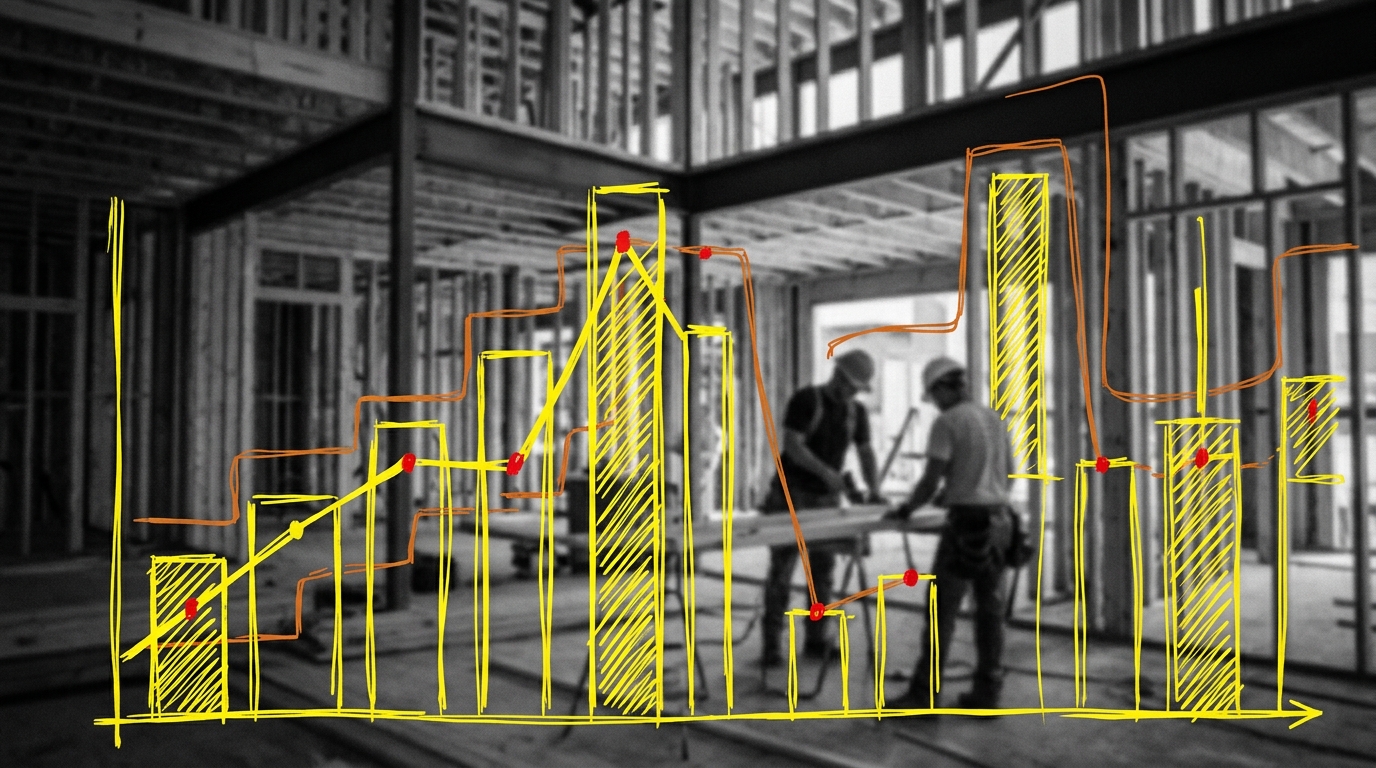
Before writing a number into a job post, it helps to know what workers in the region are actually earning across the board. In May 2024, workers in the Riverside-San Bernardino-Ontario metro area had a mean hourly wage of $30.90, compared with a national average of $32.66. That figure covers all occupations in the metro area, not electricians specifically, but it shows where regional pay sits relative to the rest of the country — useful context when a candidate there compares an offer against what neighbors in other trades are earning. The trade-specific number sharpens the picture: in May 2023, California employed 72,880 electricians, with an hourly mean wage of $40.54 and an annual mean wage of $84,330. That statewide average gives employers a California-specific reference point when pricing an industrial electrician role. Workers comparing offers can use these same regional benchmarks to gauge whether a number on the table reflects the market or falls short of it.
Prevailing Wage Rates on Public Works Projects

Wage expectations change the moment a project touches public funding, and skipping this step risks posting a number that doesn't hold up once the job is underway. California's Department of Industrial Relations issues prevailing wage determinations that set required minimum hourly rates for electricians on public works projects, and these vary by county, by classification, and by shift. DIR's residential prevailing wage determination for Los Angeles County, issued December 1, 2025 and applying to residential public works projects of up to four stories, set a basic hourly rate of $37.63 for a Residential Electrician: Inside Wireman, with $44.14 on second shift, through December 28, 2025, after which a new rate applied (PREVAILING WAGE DETERMINATION MADE BY THE DIRECTOR OF INDUSTRIAL RELATIONS). That short window before the rate changes is a reminder that prevailing wage numbers don't sit still. Transportation systems work carries its own, much higher, scale. Under DIR's 2026-1 determination for Los Angeles County, a transportation systems electrician's straight-time total hourly rate was $103.11, through June 30, 2026. The gap between a residential basic rate near $38 an hour and a transportation systems basic rate near $65 an hour (about $103 with fringe benefits) shows how much classification and project type matter on public works — an employer has to know exactly which determination applies before settling on a figure. San Bernardino County shows how these rates keep moving even within a single classification over time:
| Date | Rate Change | Zone |
|---|---|---|
| 06/01/2026 | +$3.75/hour | Zone A |
| 06/01/2027 | Additional increase scheduled | Zone A |
DIR's 2026-1 determination for San Bernardino County scheduled a $3.75 an hour increase for Inside Wireman (Zone A) on 06/01/2026, and another on 06/01/2027, so a rate set before either date can fall below the required minimum once each increase takes effect. Employers bidding on public works in that county need to check the current determination before posting, not rely on last year's number.
Apprentice Pay Rules Employers Must Follow

Bringing apprentices onto a California public works job comes with its own pay rules. Apprentice prevailing wage rates on California public works may be paid only to apprentices registered with the Division of Apprenticeship Standards, and only for work in their own craft (DIR's apprentice prevailing wage rate rules). The second part matters in practice: a registered electrical apprentice doing plumbing work on the same job site can't be paid the electrical apprentice rate for that plumbing work, because the registration and the craft performed have to match. An employer who shifts an apprentice onto work outside their registered trade, expecting the apprentice rate to still apply, has stepped outside the rule. Confirming both the registration status and the craft match before assigning a registered apprentice to a public works task keeps the apprentice rate within the rule.
Setting Pay Without a Middleman
None of the wage research above changes who actually sets the number on an offer. Construction Help Finder connects employers and skilled trade workers, then gets out of the way. It doesn't handle payment between the parties — pay rates, payment schedules, and every other term of the working arrangement are negotiated directly between the employer and the worker, the same way they would be through any other channel. That matters for how employers should think about the wage data above: it's not a figure the platform enforces or mediates, it's information an employer uses to make their own offer competitive. A contractor using a construction job board to find industrial electricians still owns the entire pay conversation — the board's job is the connection, not the deal that follows it. Workers should go into a conversation knowing the same thing: the rate on the table is whatever the employer and worker agree to, informed by regional and trade data, not set or guaranteed by anything in between.
Posting Pay Transparently to Attract Applicants
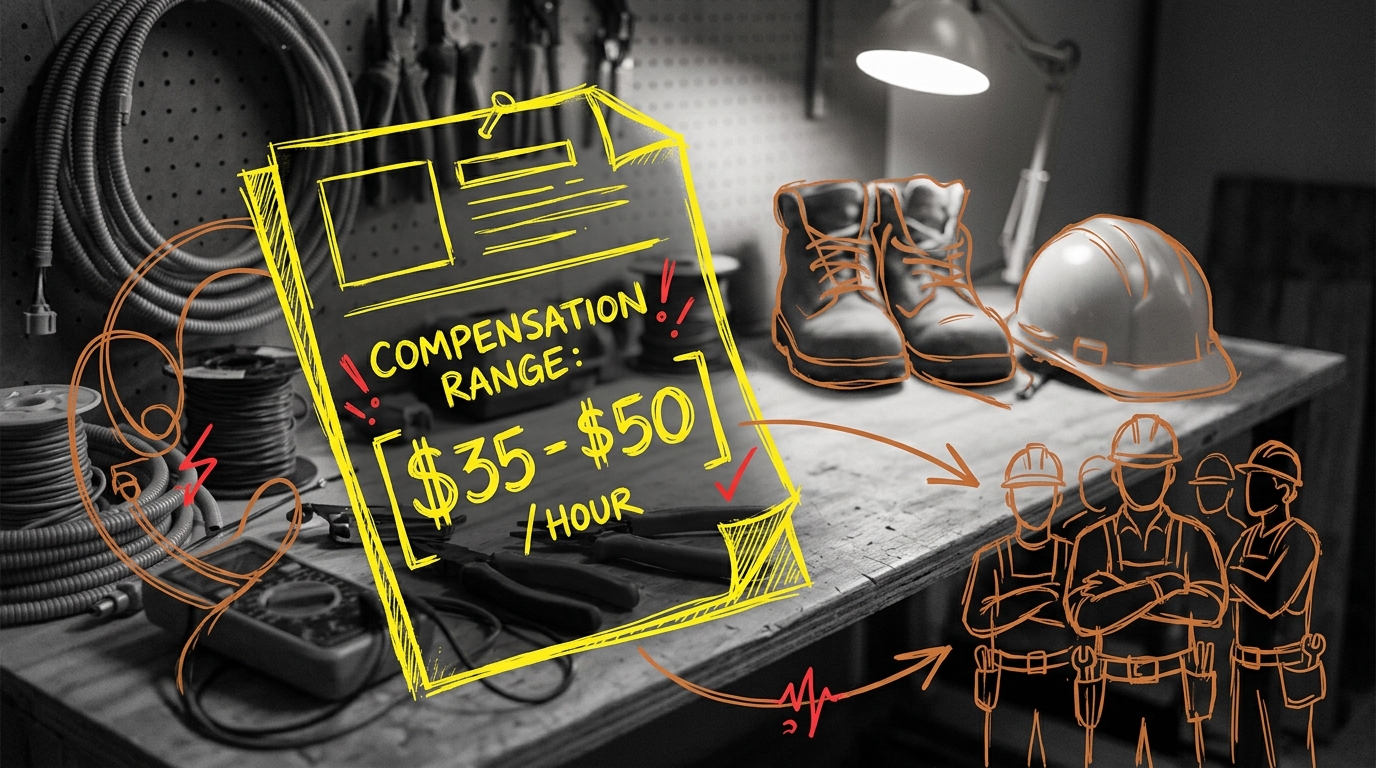
Once an employer has landed on a number, how that number gets written into the job post is itself governed by law in California. Any employer with at least 15 employees has to state the position's pay scale in every job posting. That isn't optional for employers who meet the headcount, and it isn't a detail to leave for later negotiation — the pay scale needs to be visible in the posting itself. For an industrial electrician role, the posted range should reflect the wage benchmarks discussed earlier, not a placeholder that only gets revised upward once a candidate asks. Employers crafting a job post for industrial electricians should treat the disclosed pay scale as a central part of the post. Getting the range right, and stating it plainly, matters as much to attracting qualified applicants as publishing a job listing that reaches available workers in the first place.
Frequently Asked Questions
Do California employers have to disclose pay in job postings?
Yes. A California employer with at least 15 employees has to show the position's pay scale in every job posting it puts out, industrial electrician roles included.
What is the prevailing wage for a residential electrician in Los Angeles County?
DIR's residential prevailing wage determination for Los Angeles County, issued December 1, 2025 for residential public works projects of up to four stories, set a basic hourly rate of $37.63 for a Residential Electrician: Inside Wireman, with $44.14 on second shift, through December 28, 2025. That rate has since changed, so check DIR's current determination for the county before posting.
Can apprentices be paid apprentice prevailing wage rates on any job?
No. Apprentice prevailing wage rates on California public works may only be paid to apprentices registered with the Division of Apprenticeship Standards, and only for work performed in their own registered craft.
Does Construction Help Finder handle pay or payment between employers and workers?
No. Construction Help Finder connects employers and skilled trade workers and then gets out of the way; it does not handle payment between the parties. Pay rates and payment terms are worked out directly between the employer and the worker.
How do wages compare across the Southern California region?
Federal data shows workers in the Riverside-San Bernardino-Ontario metro, part of Southern California, earned a mean of $30.90 an hour across all jobs in May 2024, below the national average of $32.66. For electricians specifically, the statewide California mean was $40.54 an hour in May 2023.
Get Started
Setting the right pay rate is only half the job — getting that offer in front of qualified industrial electricians is the other half. Construction Help Finder is a construction job board for contractors that gives Southern California employers a direct way to post work and connect with skilled trade workers who are actively looking, without a middleman standing between the offer and the applicant. If your project needs an industrial electrician and you've done the work of pricing the role right, the next step is putting it in front of the people who can fill it: Get Started.